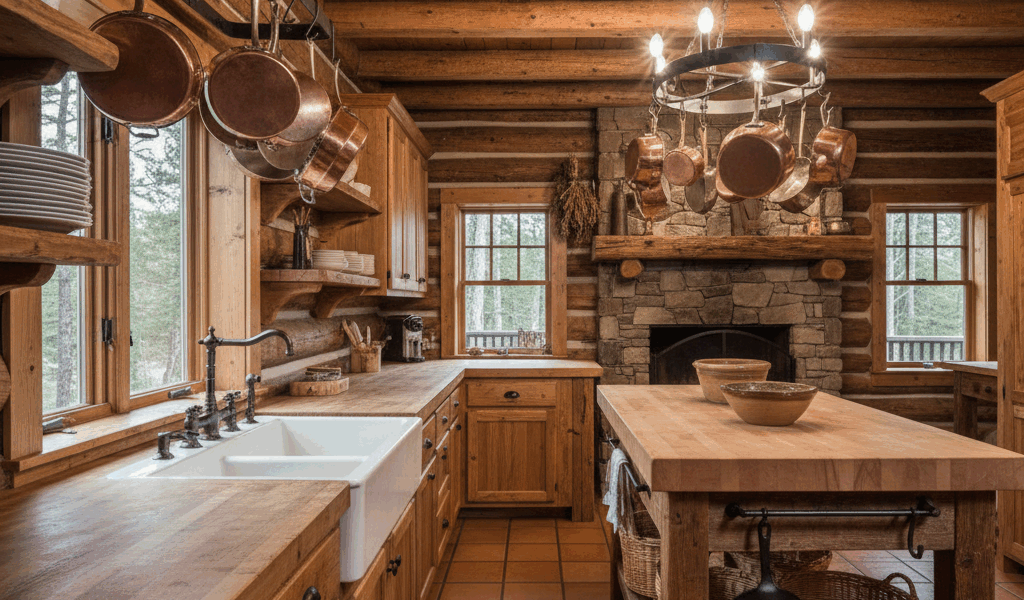
As someone who’s designed two cabin kitchens now, I can tell you that kitchen layout decisions in a log home carry weight that goes beyond standard residential design. The interplay between log walls, natural light, and the distinctive character of timber construction shapes how different layouts actually feel. I learned everything the hard way—what works brilliantly in a suburban ranch house might feel cramped or awkward in log surroundings. Understanding these dynamics helps you choose between open, galley, and hybrid configurations.

The Case for Open Kitchen Design
Open kitchens have dominated log home design for good reason. Great rooms with vaulted ceilings and expansive log walls create drama that enclosed kitchens would sacrifice. When you’re cooking, you want to participate in conversations happening around the fireplace, watch the sunset through west-facing windows, and feel connected to the life of the home. That’s what makes open kitchens endearing to us cabin owners who love to entertain.
Open layouts also solve practical problems in log construction. Interior walls in log homes require careful planning where they meet settling exterior walls. Eliminating walls between kitchen and living areas reduces these complex junctions while creating the spacious feel that draws people to log home living.
Island-based open kitchens work particularly well. The island provides necessary work surface and storage while defining the kitchen zone without walls. Seating at the island creates a natural gathering spot where guests can keep the cook company without crowding the work triangle. Our island has become the social center of the cabin.
The downsides of open kitchens are familiar: cooking smells permeate the entire space, kitchen clutter is always visible, and noise carries freely. In log homes with excellent natural ventilation, cooking smells dissipate more quickly than in tightly sealed modern construction—but they’re still present. Probably should have led with this: you need a powerful range hood if you’re going open concept.
When Galley Layouts Make Sense
Galley kitchens—parallel counters creating a corridor workspace—offer efficiency that open layouts can’t match. Everything is within a step or two. The work triangle becomes a work line, minimizing movement during food preparation. For serious cooks who spend hours in the kitchen, this efficiency matters.
Galley layouts also contain mess and noise. Close the door, and the aftermath of holiday meal preparation stays hidden from guests. The separation between cooking zone and living zone allows different activities to coexist without interference.
In log cabins, galley kitchens present design challenges. Choosing the right kitchen layout has turned into a moving target with all the competing priorities, and galleys require extra care. The corridor can feel confining when surrounded by the massive visual weight of log walls. Without careful attention to lighting and window placement, galley spaces in log homes trend toward cave-like rather than cozy.
If you choose a galley layout, prioritize natural light aggressively. A window over the sink is baseline; additional glazing wherever possible prevents the space from feeling buried within the cabin’s mass.
The Hybrid Approach
Many log home kitchens succeed with hybrid layouts that combine open and enclosed elements. A peninsula rather than full island maintains visual connection to living areas while providing some definition between zones. Partial walls that stop below ceiling height separate spaces without isolating them.
The pass-through is a classic cabin solution—a counter-height opening between kitchen and dining areas that allows food and conversation to flow while maintaining kitchen as a distinct room. This arrangement works well when cooking demands focus but sociability remains important.
Consider which kitchen activities benefit from openness and which benefit from enclosure. Casual cooking, morning coffee rituals, and light meal prep want connection. Complex cooking with multiple hot pans, deep frying, or marathon holiday sessions might warrant doors you can close. This is the approach we finally settled on.
Traffic Flow Considerations
Log cabins often have quirky floor plans driven by the building system’s requirements rather than conventional layout logic. Before finalizing kitchen placement and configuration, trace traffic patterns through the space. Where do people enter from outside? How do they move between bedrooms and living areas? Where will children or dogs naturally run?
Kitchens that sit in traffic paths create constant conflicts between cooking activities and household movement. The galley layout is particularly vulnerable here—if the galley doubles as a hallway, you’ll spend years navigating around people while trying to cook. Trust me on this one.
Open layouts handle traffic more gracefully because the space accommodates multiple paths. But even open kitchens can position islands or peninsulas in ways that create bottlenecks. Mock up proposed layouts with tape on the floor before committing to construction.
View Orientation
Your log cabin probably sits where it does partly because of the views. Kitchen layout should respect this reality. Position the sink to face windows with the best scenery—dishwashing becomes meditative rather than tedious when you’re watching deer in the meadow. That’s what makes thoughtful kitchen planning so rewarding.
If your great room captures a spectacular mountain view, open kitchen layouts let you share that view while cooking. A galley tucked at the back of the cabin sacrifices this connection entirely.
Making Your Choice
There’s no universally correct answer. Your cooking style, entertaining frequency, household composition, and site characteristics all influence the optimal choice. What matters is thinking through these factors deliberately rather than defaulting to whatever configuration appears in the floor plan catalog.
The kitchen you build will shape daily life for decades. Take time to get it right—I wish I’d spent more time on our first cabin’s kitchen before realizing what we really needed.


Stay in the loop
Get the latest rustic cabin world updates delivered to your inbox.