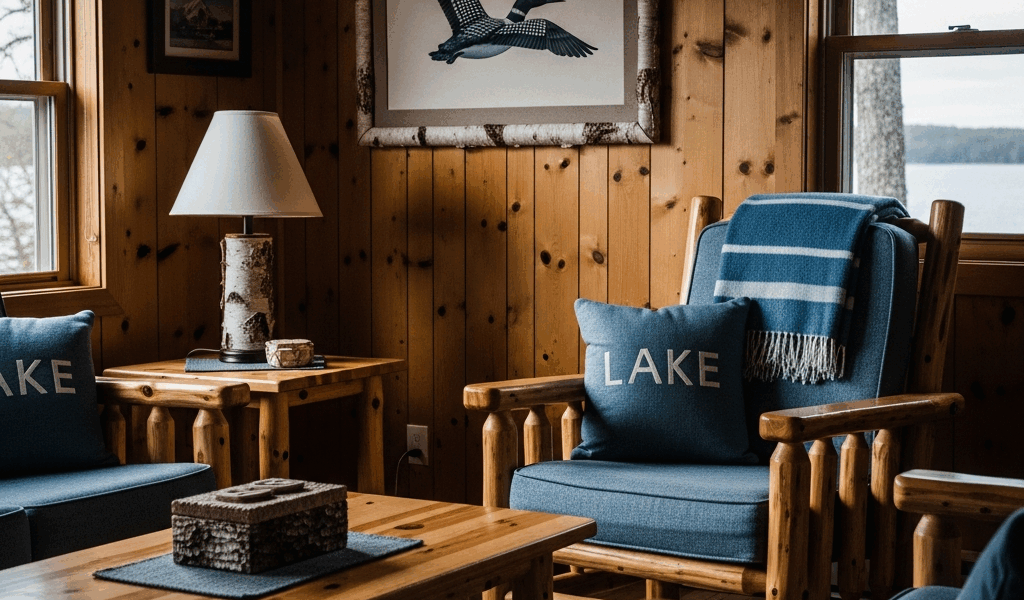
You walk into a cabin in the Boundary Waters and something feels different from every other rustic space you have been in. The colors are cooler — lake blues and pine greens instead of barn reds. The wood is birch, not cedar. There is a loon carved into the bathroom shelf instead of a bear. That is the northwoods aesthetic, and it has a specific regional identity that generic “rustic decor” misses entirely.
What Makes Northwoods Style Different From Generic Rustic
Northwoods cabin decor has a distinct regional character that separates it from Rocky Mountain lodge style, Appalachian cabin, or Pacific Northwest rustic. Getting this distinction right is what makes a cabin feel like it belongs on a Minnesota lake instead of anywhere-with-wood-walls.
The defining elements start with materials. White birch is the iconic tree of the Upper Midwest — its pale bark with black diamond-shaped markings is visually distinctive and shows up throughout authentic northwoods decor. Birch bark trays, birch log lamp bases, birch branch curtain rods. The wood itself signals region the way mesquite signals the Southwest.
Wildlife motifs tell you immediately whether someone knows northwoods or is guessing. Loons and walleye are northwoods icons. Elk and moose are Rocky Mountain. Trout is Western stream country. If your cabin sits on a Wisconsin lake and the art shows elk standing in a mountain meadow, the decor is geographically confused. Getting the species right signals authenticity to anyone who has spent time in lake country.
The color story also shifts. Northwoods leans toward deep greens and cool lake blues where Western cabin style goes warm with reds, oranges, and tans. The northwoods palette comes from what surrounds these cabins: white pine forests, overcast lake water, birch bark, and weathered dock boards.
Birch: The Signature Northwoods Material
If one material defines northwoods interiors, it is white birch. The pale bark with its black markings reads as distinctly Upper Midwest, and it works in dozens of applications throughout a cabin.
The most popular uses: birch log lamp bases — either purchased from northwoods specialty retailers or made as a weekend DIY project from fallen branches. Birch bark trays and bowls show up at every northwoods gift shop from Ely to Minocqua and they serve as both functional pieces and decorative accents. Birch branch candle holders group well on a mantel or dinner table. Birch branch curtain rods add rustic character to windows without looking heavy.
For DIY, naturally fallen birch branches and bark are free and legal to harvest in most northwoods locations — never peel bark from a living birch tree, as it damages the tree permanently. Fallen logs and branches provide bark that is already drying and has the weathered character you want. Seal with a coat of matte polyurethane to slow degradation and prevent the bark from flaking in a heated cabin.
For finished birch decor, Cabin Place and Northern Reflections carry a wide selection online. Local gift shops in lake country towns often stock pieces from regional artisans — these tend to have more character and a story behind them, which is exactly what cabin decor should feel like.
The Color Story: Lake Country Blues and Greens
Northwoods color palette is not interchangeable with other rustic styles. The colors come from a specific landscape and using them correctly is what makes a cabin feel like it belongs on its lake.
The core palette has four anchors. Pine green — the color of a mature white pine seen from across the lake. Lake blue — the specific pale grey-blue of a Minnesota lake on an overcast morning, not the bright turquoise of a Caribbean postcard. Birch white — the warm white of the bark, not a cold bright white. And dark brown — the color of dock boards, cabin logs, and wet tree bark after rain.
For paint colors that nail these tones: Sherwin-Williams Svelte Sage captures the pine green without going too dark. Benjamin Moore Coastal Fog gives you that specific lake-grey-blue. Behr Natural White works for birch-inspired walls. All three read as northwoods when paired with natural wood trim and warm lighting.
Accent pieces carry the palette into the room: deep teal throw pillows in the color of a clear northern lake on a sunny afternoon, forest green wool blankets, brown leather chair cushions. The accents should feel like samples of the outdoors brought inside.
What to avoid: the warm reds and burnt oranges of Rocky Mountain and Santa Fe style. They are beautiful in those contexts, but they do not read as northwoods. A red Pendleton blanket on a couch says Wyoming lodge. A green wool blanket says Lake Vermilion cabin. The difference matters to anyone who recognizes the regional style.
Wildlife and Fish Motifs: Authentic vs Touristy
Every northwoods cabin has some wildlife element in the decor. The difference between a cabin that feels authentic and one that feels like a gift shop comes down to restraint and species accuracy.
The authentic approach: one or two pieces of genuine quality wildlife art rather than ten mass-printed items scattered across every wall. Quality over quantity, always.
The northwoods-specific species to feature: loon (the sound of a northwoods evening), walleye (the fish of the region), muskie (the fisherman’s obsession), white pine, white birch, great blue heron, and black bear. All are native to the upper Midwest lake country. A rainbow trout painting or a moose sculpture signals a different geography — trout means Western streams, moose reads as Maine or Montana more than Minnesota, despite occasional Upper Peninsula sightings.
Where to find good pieces: vintage wildlife art from regional photographers or northwoods artists shows up at area auction houses and antique shops. The Minnesota DNR and Wisconsin DNR have produced gorgeous wildlife prints over the decades, and originals turn up at estate sales in lake country. For new pieces, look for regional artists who paint from the northwoods specifically — their work captures the light and landscape correctly in ways that generic wildlife art does not.
The authenticity test: does the wildlife art look like it came from this specific region, or could it hang in any cabin anywhere? If a piece could be at home in a lodge in Colorado as easily as in a cabin on Pelican Lake, it is probably too generic.
Lake and Dock Elements That Work Indoors
The best northwoods cabins bring the lake inside in small, deliberate ways that remind you what is right outside the door.
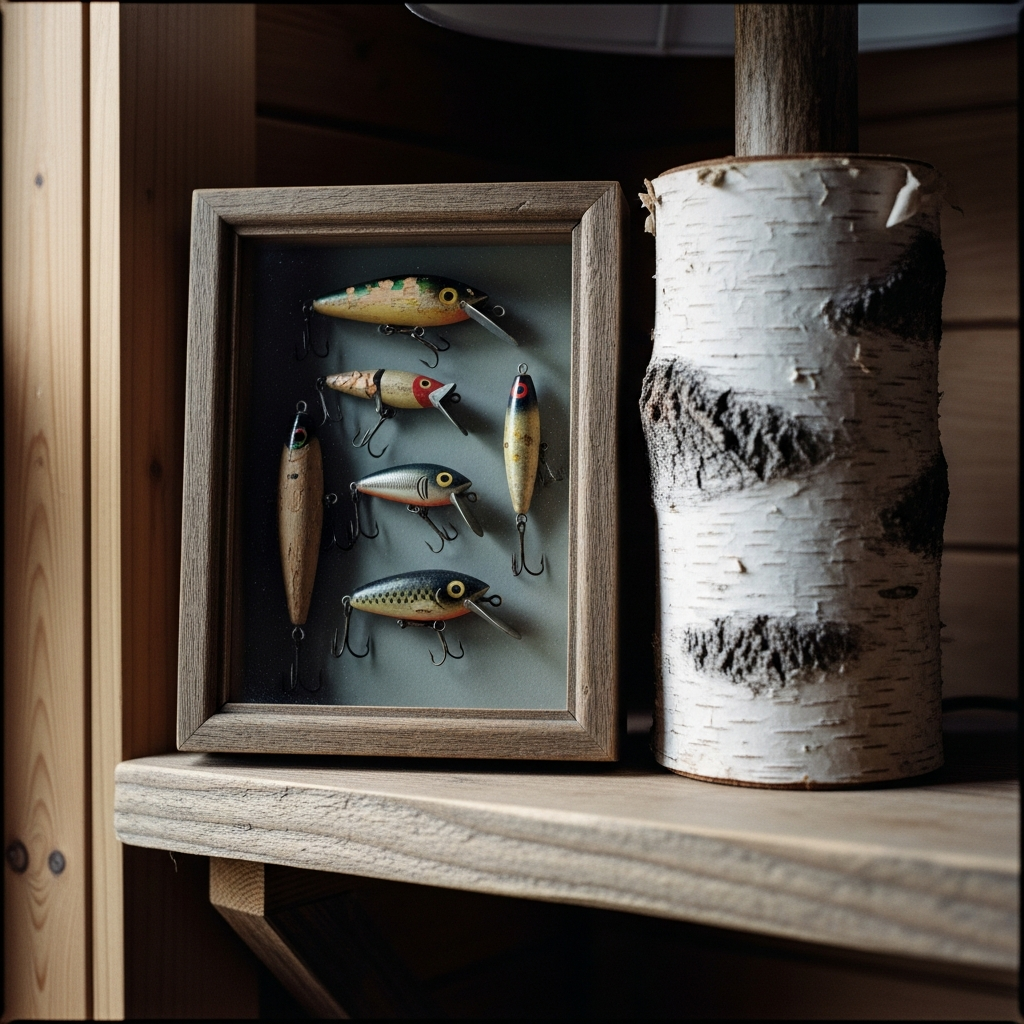
Elements that work: an old wooden dock sign — hand-painted, properly faded from years of weather — repurposed as wall art. Vintage fishing lures displayed in a shadow box frame, particularly authentic lures from regional manufacturers that are both collectible and visually interesting. Old wooden paddles mounted as wall decor, especially if they show real wear from actual use. A vintage fish mount for cabins whose owners appreciate traditional taxidermy.
The vintage versus new rule matters more in northwoods decor than almost any other style. Worn and weathered items signal authenticity — they look like they have been part of the cabin for decades. A perfectly new fishing-themed sign from a chain retailer reads as purchased-not-lived, and the difference is immediately apparent. A real antique creel basket or a collection of vintage Arbogast lures in a display case reads as a lifetime of fishing distilled into decor. That is the goal.
For cabin rentals, consider balance. Some guests find traditional taxidermy charming. Others find it unsettling. Artwork and photography of fish and wildlife typically works for broader appeal than mounts. A beautifully framed walleye painting gets the same point across as a mounted walleye, without the debate.


Stay in the loop
Get the latest rustic cabin world updates delivered to your inbox.