Why Propane Smells Different at a Cabin
Cabin propane smells have started getting harder to follow with all the conflicting advice flying around. As someone who’s been opening up our family’s place in upstate New York every spring for going on twelve years, I got hands-on with that rotten-egg stench the hard way. Today, I will share it all with you.
That March morning — door cracked maybe two inches before the smell hit me — changed how I think about cabin propane entirely. Cabins aren’t houses. Temperature swings crack fittings. Months of sitting empty let moisture and mineral deposits eat through connector points. Rodents move in — deer mice especially — and they’ll chew rubber flex lines all winter like it’s their job. Old brass or copper fittings from the 1980s were never built to hit 40 years of service. Most of them won’t.
Here’s the part most online articles skip entirely. Propane is heavier than air. It sinks to floor level and pools in corners. You won’t catch it standing in your living room. You’ll catch it when you bend down to grab something, or when you open the cabinet under the stove. That distinction matters — it changes where you look and how urgent the whole situation actually is.
Step 1 — Get Out First, Investigate Second
Strong smell the moment you walk in? Leave. Don’t flip light switches. Don’t pull out your phone inside. Don’t close windows behind you. Walk out, prop the door open, and breathe actual air for a minute.
A thick, eye-watering propane smell means gas is escaping fast enough to fill the space — and that’s an ignition risk. An old furnace click. A light switch arc. A phone vibrating on a table. Any of that is enough. Worth putting near the top, because I know at least three cabin owners who stood inside a propane-filled room debating the situation before deciding to leave. Skip the misstep I made.
Once you’re outside with the door propped open, call your propane supplier from your cell. Give them the address. Give them the situation. Most companies will dispatch someone even to remote locations when you report a strong smell — that’s not an unusual ask on their end.
The Most Common Sources of Propane Leaks in Cabins
Faint smell? Something you only notice near one appliance, or in a single corner? Then you can start diagnosing. These are the spots I check first, and they account for roughly 85% of the leaks I’ve personally found or heard about from neighbors on our road.
Tank Regulator Failure
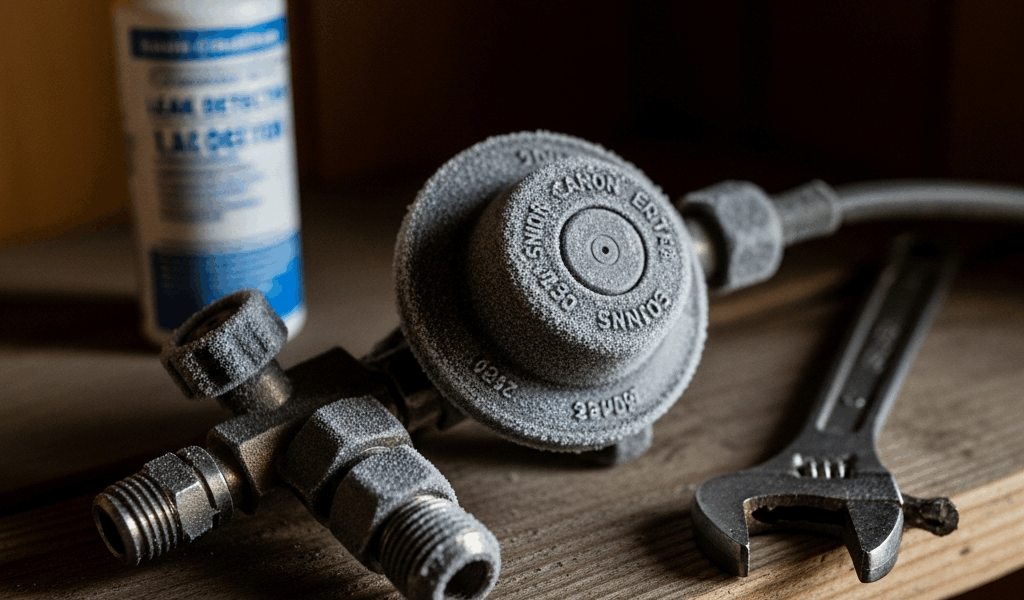
The regulator sits right on top of your propane tank — small metal box, one inlet from the tank, one outlet to your lines — and it takes the full brunt of freeze-thaw cycles all winter. The rubber seal inside cracks. I’ve replaced two of them in eight years. Regulators run $40 to $80, which isn’t nothing, but it’s not bad either. Smell concentrated near the tank itself? Start here.
Corroded Flex Connectors
But what is a flex connector failing? In essence, it’s the rubber hose between your appliance and the main propane line giving out after years of moisture and temperature abuse. But it’s much more than that — the real problem is usually at the brass fittings on both ends, not the hose itself. Look for white or blue corrosion buildup on the metal. After about seven years, these connectors are suspect. Replacements cost $15 to $30 at any hardware store.
Fittings Loosened by Settling
Cabins shift. Foundations heave slightly through freeze-thaw cycles. Walls settle over winter. A fitting that was snug in November can be finger-loose by April — and that’s a surprisingly common leak source. I’ve tightened probably two dozen fittings over the years with nothing more than a standard adjustable wrench. That’s what makes this particular fix endearing to us cabin owners: it costs nothing and takes three minutes.
Rodent Damage to Exposed Lines
Deer mice chew through propane line insulation to get at the copper underneath. Apparently they like the metal itself — or the taste of the shavings, nobody’s entirely sure. I’m apparently a magnet for this specific problem and checking flex lines every spring works for me while ignoring it through the fall never does. Obvious teeth marks or cracked rubber on a line means full replacement — technician job, not a patch situation. The silver lining is that the smell warns you before the line fails completely.
How to Find a Small Leak Yourself Safely
So, without further ado, let’s dive into the soapy water test — but only after you’ve aired the cabin out properly. Open every window, run a box fan if you have one, and give it at least 15 minutes before you’re comfortable staying inside and working.
Mix dish soap and water in a spray bottle — one teaspoon of soap to one cup of water is all you need. Spray it on:
- The regulator on top of the tank, every seam, and the outlet connection
- The point where the main line leaves the tank
- Every fitting where a flex line meets an appliance
- Any visible joints in copper or brass lines
Watch for bubbles. One bubble forming and slowly growing is a leak. A slow seep of bubbles from a fitting joint is also a leak. Nothing within 30 seconds means that connection is holding fine.
I keep a can of propane leak detector spray at the cabin year-round — $12 to $18, brands like Chemtronics or Interdynamics work well. It smells even more aggressively like rotten eggs than propane itself does, which makes it useful for pinpointing a weak smell you can’t quite locate. Spray it around the suspected area. If there’s a leak, you will know immediately.
When to Call Someone and What to Tell Them
While you won’t need a full technician for every minor fitting adjustment, you will need a handful of situations where you just stop and call. Leak on the regulator itself? Call. Underground line showing damage? Call. Shutoff valve corroded shut or refusing to turn? Call. Those aren’t DIY jobs.
Your propane supplier’s number should be posted on your fridge — not saved somewhere in your phone where you’ll spend four minutes finding it at the wrong moment. When you call, be specific: “I’ve found a propane smell in my cabin. I ran a soapy water test and located the leak at the flex connector on the water heater. The smell is faint right now. I’m not in immediate danger, but I need it inspected and repaired.”
That framing tells them you’ve done basic diagnostics and you’re not panicking. You’ll get faster service — at least if you sound like you know what you’re dealing with.
Many rural propane companies offer free leak checks. They’ll come out, run their own detector equipment, and give you a written report. Some will make the repair the same visit for a standard service fee. Ask when you call. Most people don’t ask.
A spare regulator might be the best option for very remote cabins, as isolated propane service requires long lead times. That is because rural dispatch schedules run 48 to 72 hours out during busy seasons — and a failed regulator mid-trip means a cold cabin for days. Store a spare in a cool, dry place. That’s a $60 insurance policy. One bad service call and it pays for itself ten times over.




Stay in the loop
Get the latest rustic cabin world updates delivered to your inbox.