Design Your Own Cabin
Designing your own cabin has turned into a moving target with all the Pinterest boards, floor plan generators, and competing builder opinions flying around. As someone who designed a cabin from a blank piece of graph paper to a finished building that I’m sitting in right now — including three redesigns after I realized the bathroom was in the wrong spot — I sat down and learned turning an idea into a structure. Today, I will share it all with you.
Choosing the Right Plot
The land comes first and everything else follows. Visit the site before you design anything — walk it in the morning and in the afternoon, because the light changes everything. We chose our plot because of a south-facing slope (passive solar gain in winter), a stand of mature hardwoods that provide summer shade, and road access that doesn’t become impassable in mud season. Check the soil. Literally. A percolation test tells you whether you can install a septic system, and if it fails, you’re looking at an engineered system that costs three times as much. Know the flood zones, the fire risk, and whether your neighbor’s property drains onto yours.
Cabin Size and Layout
Here’s where most people go wrong: they design the cabin they want instead of the cabin they need. Every square foot you add costs money to build, heat, cool, furnish, and maintain. Our cabin is 1,200 square feet and it’s enough for two adults, occasional guests, and a home office. Could I use more space? Sometimes. Would I want to heat, stain, and maintain more space? Absolutely not.
Probably should have led with the room-by-room planning, honestly. Decide what rooms you actually need. Living room, kitchen, bedroom, bathroom — those are the non-negotiables. A second bedroom for guests, a mudroom for boots and coats, a pantry for storage. Everything else is a want, not a need, and wants get expensive fast.
Floor Plan Options
- Open Floor Plan: Kitchen, dining, and living area all connected. This is what we did and it makes the cabin feel twice its actual size. Natural light reaches everywhere. The downside is noise — there’s no escaping the dishwasher or the TV from anywhere on the main floor.
- Traditional Layout: Separate rooms with doors. More privacy, easier temperature zoning, quieter. Feels smaller because walls block sight lines. Works well for cabins used by multiple generations who want their own space.
- Custom Layout: A hybrid where you open some areas and close others. Our kitchen and living room are open, but the bedrooms and office have doors. Best of both approaches if you think it through during design.
Choosing Building Materials
I’m apparently a “natural materials only” person and solid wood construction works for me while composite panels never capture the same warmth. But budget is real and materials are where budget meets ambition. Full log construction costs more than stick-frame with log siding. Stone foundations cost more than concrete block. Cedar costs more than pine. At every decision point, you’re balancing aesthetics, durability, maintenance requirements, and cost. Reclaimed wood is a genuine option that looks incredible, reduces environmental impact, and tells a story — our kitchen countertop was milled from a barn beam that’s older than the state we live in.
Foundation and Structure
The foundation is the least exciting part of the build and the most important. A concrete slab is the simplest and cheapest but offers no crawl space access for plumbing and wiring. Pier and beam elevates the cabin, allows access underneath, and handles sloping terrain well but can let cold air circulate under the floor in winter. A full perimeter foundation with a crawl space is what we chose — it costs more but the plumbing access and floor insulation options are worth it.
Structural Integrity
- Framing: Wood framing is standard and cost-effective. Steel framing is stronger but more expensive and requires different fastening techniques. For a cabin, wood framing is almost always the right call.
- Insulation: This is where you invest in long-term comfort. Spray foam in the roof, fiberglass batts in framed walls, rigid foam under the slab if applicable. Every dollar spent on insulation pays dividends in heating bills for the life of the building.
- Roofing: Metal for longevity and snow-shedding, asphalt shingles for budget. We went metal and it was the right choice for our climate.
Utilities and Amenities
Plan utilities early because they affect the floor plan. The bathroom needs to be near the septic line. The electrical panel needs wall space. The water heater needs a location near the bathroom and kitchen to minimize pipe runs. If you’re going off-grid, the solar array orientation and battery bank location become design drivers. We’re grid-connected but wired the cabin for future solar — running conduit during construction costs almost nothing compared to retrofitting later.
Exterior Design
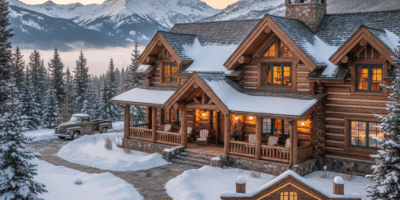
The exterior is the cabin’s handshake with the landscape. It should look like it belongs where it sits. Our cabin uses log siding stained to match the bark color of the surrounding oaks, a metal roof in a dark bronze that disappears against the tree canopy, and a stone foundation that matches the creek stone found naturally on the property. The porch wraps the south and west sides — south for winter sun, west for sunset views. These weren’t aesthetic choices made from a catalog; they came from standing on the site and paying attention to what was already there.
Interior Design
Design the interior for how you actually live, not how a magazine says you should live. We put the kitchen at the center of the cabin because we cook constantly and wanted it accessible from every direction. The living room faces the best window view. The bedroom faces east for morning light. The office faces north for diffused, glare-free light on the screen. Every room placement had a reason tied to daily use.
Furniture and Decor
- Built-In Furniture: Window seats, bookshelves flanking the fireplace, kitchen bench seating with storage underneath. Built-ins save floor space and look like they were always part of the cabin.
- Minimalist Decor: Fewer things, better things. A handmade quilt on the bed, a single good painting over the mantel, a set of ceramic mugs made by a local potter. Clutter kills the cabin vibe faster than anything.
- Personal Touches: That’s what makes cabin interiors endearing to us cabin dwellers — the stuff that only means something to you. Our mantel has a piece of driftwood I found on a hike the week we closed on the property.
Sustainability Practices
Orient the cabin for passive solar — large south-facing windows gain free heat in winter while roof overhangs block high summer sun. Use locally sourced materials to reduce transportation impact and support the local economy. LED lighting throughout. A woodstove that burns efficiently produces more heat per cord than an open fireplace. Rainwater collection for the garden. None of this is extreme — it’s just thoughtful building practice that happens to reduce the environmental footprint.
Permits and Regulations
Call the county building department before you design anything. Their requirements will constrain your options in ways you need to know upfront — setbacks from property lines, maximum building height, minimum room sizes, required egress windows in bedrooms, septic system distances from wells. We discovered a 75-foot setback from the creek that eliminated our first choice of building location entirely. Better to find that out on a phone call than after pouring a foundation.
DIY vs. Professional Construction
Be honest with yourself about your skills. I did the interior finishing — tongue-and-groove paneling, trim carpentry, staining, painting. I hired professionals for the foundation, framing, roofing, electrical, and plumbing. The structural and code-critical work needs to be done right, and “right” means licensed, insured, and inspected. The cosmetic work can be learned and done at your own pace. This split saved us about 30 percent compared to a full-turnkey build.
Budget Planning
Set your number, add 20 percent for contingencies, and hold to it. Track every expense in a spreadsheet — material costs, labor invoices, permit fees, tool purchases, delivery charges. Our build came in 15 percent over the original budget, which was within the contingency. The overages came from upgrading the windows (worth it) and an unexpected rock ledge in the foundation excavation (unavoidable). Having the contingency fund meant these weren’t crises, just adjustments.
Cost-Saving Tips
- Do Your Own Finishing: Interior staining, painting, trim work, and fixture installation are all learnable skills that save thousands in labor.
- Source Locally: Local sawmills sell lumber at half the price of big-box stores. Our flooring came from a local mill and cost $2.50 per board foot versus $6 at the lumber yard.
- Keep the Design Simple: Every angle, bump-out, and roofline change adds cost. A rectangle with a gable roof is the cheapest shape to build and one of the best-looking in a wooded setting.
Timeline Management
Our build took seven months from foundation pour to move-in. Plan for weather delays, material delivery delays, and subcontractor scheduling conflicts. Build in buffer time and don’t set a hard move-in date that you’ve told everyone about. The stress of a deadline on a construction project leads to shortcuts, and shortcuts in a cabin come back as problems within the first two winters.

Stay in the loop
Get the latest rustic cabin world updates delivered to your inbox.