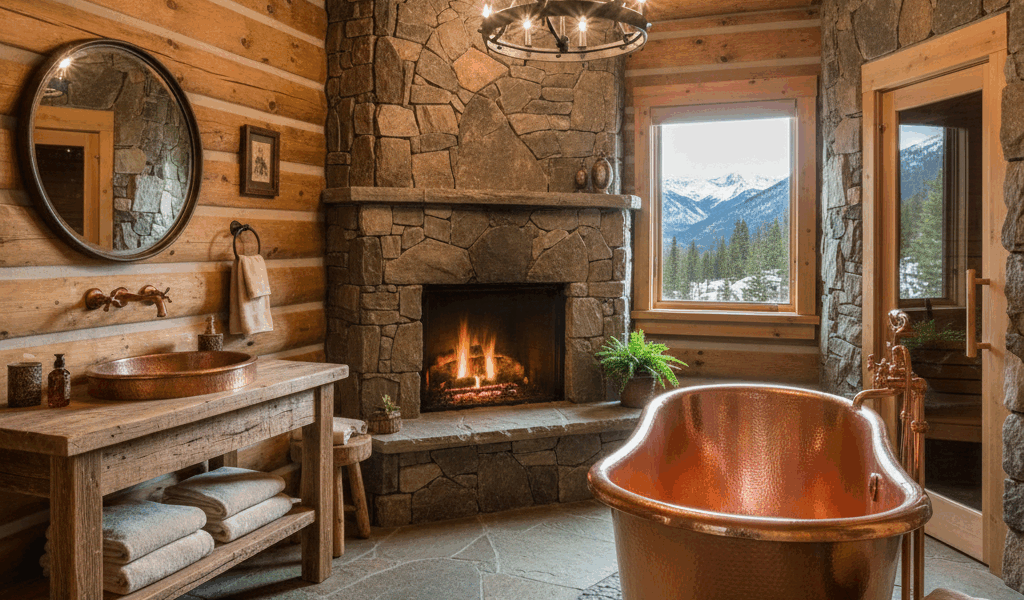
As someone who’s replaced bathroom fixtures twice in my cabin—learning expensive lessons both times—I can tell you that bathroom fixtures in a log cabin face challenges that suburban bathrooms never encounter. The combination of temperature extremes, high humidity during use, and the organic nature of surrounding wood creates conditions that destroy inferior fixtures and finishes within years. I learned everything the hard way before understanding what actually survives mountain bathroom environments.

The Humidity Reality in Log Bathrooms
Hot showers generate tremendous moisture. In conventional construction, exhaust fans remove humid air and drywall absorbs temporary moisture spikes without lasting damage. Log walls respond differently. Wood absorbs humidity readily, and repeated wet-dry cycles can cause checking, mold growth, and finish deterioration if moisture isn’t managed properly.
This reality shapes every fixture decision. Materials that perform adequately in dry environments may fail when repeatedly exposed to bathroom humidity. Finishes that look identical on the showroom floor perform very differently over years of steam exposure. Probably should have led with this: my first set of chrome fixtures looked beautiful for exactly eighteen months.
Faucets That Actually Last
Skip chrome-plated fixtures for primary bathrooms. Chrome looks great initially but develops corrosion, pitting, and peeling in humid mountain environments far faster than in temperate lowland bathrooms. The temperature differentials alone—bathrooms that might drop below freezing in unheated cabins, then experience hot shower steam—accelerate finish failure.
Solid brass or bronze fixtures cost more upfront but develop attractive patina rather than deteriorating over time. Oil-rubbed bronze finishes suit rustic aesthetics while hiding the water spots and mineral deposits that plague chrome in hard-water areas. Brushed nickel offers a middle ground—more durable than chrome, though still requiring occasional attention to maintain appearance.
Look for fixtures with ceramic disc valves rather than rubber washers. The extreme temperature cycles in mountain cabins accelerate rubber degradation. Ceramic components handle these conditions indefinitely without developing drips. That’s what makes quality fixtures worth the investment—you install them once and forget about them.
Sink and Vanity Selection
Vessel sinks on rustic wood vanities have become log cabin cliches for good reason—the combination looks appropriate and functions well. Raised bowls keep water away from wood surfaces, and the variety of vessel materials allows matching any aesthetic. Copper vessels develop gorgeous patinas. Stone vessels add natural texture. Cast concrete offers modern-rustic appeal.
Whatever sink style you choose, ensure adequate clearance between wet surfaces and wood elements. Water sitting on wood causes damage regardless of finish quality. Design the vanity so splashes and drips fall harmlessly into the basin or onto easily cleaned surfaces.
Vanity materials matter enormously. Selecting the right vanity has gotten complicated with all the options out there now. Reclaimed barn wood looks perfect but requires proper sealing and ongoing maintenance to survive bathroom humidity. Painted wood hides moisture damage until it becomes severe. Consider stone, tile, or composite countertops that handle water without damage, reserving wood for vertical surfaces and cabinet faces where moisture exposure is less direct.
Toilet Considerations
Toilets in log cabins face the same freeze risk as all plumbing. If your cabin will sit unheated during winter, standard toilets require complete draining and antifreeze treatment during winterization. This is manageable but adds steps to seasonal closing procedures.
Composting toilets eliminate freeze concerns entirely while reducing water consumption—particularly valuable for off-grid cabins with limited well capacity or septic constraints. Modern composting toilets bear little resemblance to primitive outhouses. Quality units are odorless, require minimal maintenance, and produce usable compost for non-food gardening. I was skeptical until I stayed in a cabin with one.
If composting seems extreme, consider toilets designed for low-water operation. Models using 1.0 gallons per flush or less reduce both water consumption and septic system demands while functioning reliably in cold conditions.
Shower and Tub Solutions
The shower enclosure presents the greatest moisture management challenge. Properly waterproofed tile remains the gold standard—beautiful, durable, and completely impervious when installed correctly. The key phrase is “installed correctly.” Tile work in log cabins requires understanding differential movement between settling logs and rigid tile surfaces.
Cultured stone and solid surface materials offer easier installation with excellent durability. These manufactured products resist moisture intrinsically rather than relying on grout and waterproofing membranes. They’re also warmer to the touch than ceramic tile—a real comfort factor in cold morning bathrooms.
Clawfoot and freestanding tubs fit log cabin aesthetics beautifully. Their open design allows air circulation that reduces moisture accumulation around the tub base. Cast iron tubs hold heat wonderfully but take longer to warm initially—plan ahead or invest in a tub with insulated construction. Our clawfoot tub is my wife’s favorite feature in the entire cabin.
Ventilation Is Non-Negotiable
Every fixture decision becomes less critical when proper ventilation removes moisture before it damages anything. Exhaust fans sized appropriately for bathroom volume, vented to the exterior, should run during and after every shower. Timer switches ensure adequate run time without relying on occupant memory.
In extreme climates, heat recovery ventilators can exhaust moisture while capturing heat energy—important when every BTU matters for cabin heating budgets.
Building for Decades
Bathroom renovations in log cabins are particularly disruptive. The integration between fixtures, waterproofing, and log walls means changes aren’t simple. Spend more upfront on quality fixtures that will last, and you’ll avoid the hassle and expense of premature replacement. That’s what makes this investment worthwhile—your grandchildren should inherit these bathrooms, not replace them.

Stay in the loop
Get the latest rustic cabin world updates delivered to your inbox.