As someone who’s debated this decision with my spouse for years—and lived with both configurations—I can tell you the master bedroom location debate divides log cabin owners into passionate camps. Loft advocates praise morning views, dramatic ceiling lines, and separation from main floor activity. Main floor proponents cite accessibility, convenience, and practical concerns about aging in place. I learned everything the hard way before understanding that both positions have merit, and the right choice depends on factors specific to your situation.

The Loft Sleeping Experience
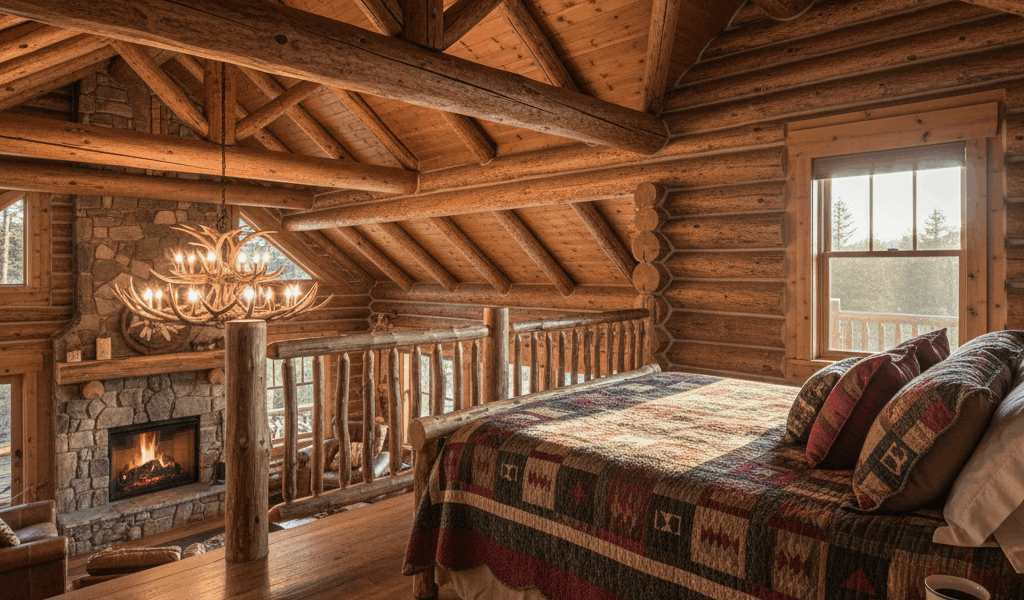
There’s something magical about sleeping under the ridge of a log cabin. You’re surrounded by the structure’s most dramatic elements—exposed beams, massive rafters, perhaps a dormer window framing mountain peaks. Morning light enters differently up here, filtering through clerestory windows and creating shadows that change with the seasons. That’s what makes loft sleeping endearing to us cabin romantics.
Loft bedrooms also offer genuine privacy. The vertical separation from main floor living spaces means late-night conversations around the fireplace don’t disturb sleeping family members. In cabins with multiple guests, this separation proves invaluable.
Temperature stratification works in the loft’s favor during winter. Heat rises, and loft spaces stay warmer than main floors with less direct heating. On cold mornings, that extra warmth makes leaving the covers slightly less painful. I still remember waking up in our loft to find frost on the main floor windows while our bedroom stayed comfortable.
The same stratification becomes a liability in summer. Without adequate ventilation and ceiling fans, loft bedrooms become uncomfortably warm during hot weather. Ridge vents, operable windows, and air movement are essential in warm-season loft sleeping.
The Practical Challenges of Loft Living
Stairs are the loft’s fundamental limitation. Every trip between bedroom and bathroom, between sleeping area and kitchen, requires climbing. At twenty-five, this seems trivial. At fifty-five, you notice. At seventy-five, it may become impossible. Probably should have led with this: we didn’t think about aging when we designed our first cabin, and we’re thinking about it constantly now.
Carrying laundry, changing bed linens, and recovering from injuries all become more difficult with a loft bedroom. Middle-of-the-night bathroom trips involve navigating stairs in darkness. These realities don’t diminish the loft’s appeal, but they deserve honest consideration.
Space constraints also affect loft bedrooms. Sloped ceilings reduce usable floor area. Standard furniture may not fit under eaves. Knee walls limit where beds and dressers can be placed. What looks spacious in renderings often feels cramped when furnished.
The Main Floor Master Advantage
Main floor master suites solve accessibility concerns permanently. No stairs means no barriers, regardless of age, injury, or temporary disability. Planning for cabin bedroom layout has gotten complicated with all the competing priorities, but aging-in-place consideration matters even if you’re building young—the cabin you create should serve you for decades.
Main floor bedrooms also offer direct outdoor access possibilities. A private patio or deck off the master suite creates morning coffee spaces and evening retreats unavailable to loft bedrooms. The connection between indoor sleeping space and outdoor environment enhances cabin living in ways that vertical separation prevents.
Bathroom placement becomes simpler with main floor masters. Full bathrooms on upper floors require additional plumbing runs, structural support for fixtures, and waterproofing consideration for spaces below. Main floor bathrooms sit directly on the foundation with straightforward drainage.
The Main Floor Compromise
Main floor masters sacrifice the drama of loft sleeping. Ceiling heights are typically standard rather than vaulted. Views may be compromised by surrounding terrain or vegetation that wouldn’t affect elevated sleeping spaces. The experience is more conventional, less distinctively cabin-like.
Privacy can also suffer. Main floor bedrooms share the same level as kitchens, living areas, and often guest rooms. Sound transmission is more direct. Early risers and late sleepers in the same household negotiate these shared spaces constantly.
The Hybrid Solution
Thoughtful design can provide both options. Build the main floor master suite now while you’re able to enjoy a loft space as the primary bedroom. As years pass, transition to main floor sleeping while converting the loft to guest quarters, office space, or hobby area.
This approach requires committing to main floor space that may feel underutilized initially. The trade-off is flexibility that accommodates changing needs without renovation. This is what we finally did in our second cabin, and I only wish we’d thought of it the first time.
Questions to Ask Yourself
How long will you own this cabin? If it’s a retirement destination where you’ll spend decades, main floor accessibility deserves heavy weight. If it’s a weekend retreat you’ll sell before physical limitations become relevant, loft romance may win.
Who else uses the cabin? Multi-generational use argues for main floor masters, ensuring everyone can participate regardless of mobility. Young families might prioritize keeping children’s spaces on separate floors from adult sleeping.
What does your daily routine look like? If you rise early and prefer quiet mornings alone, main floor sleeping offers easy access to coffee and sunrise without disturbing others. If you tend toward late nights and leisurely mornings, loft sleeping might suit better.
There Is No Wrong Answer
Both configurations work. Both have produced cabins where families have thrived for generations. The key is honest assessment of your priorities, realistic projection of future needs, and willingness to live with the trade-offs inherent in either choice. That’s what makes this decision so personal—only you know what matters most for your family’s cabin life.

Stay in the loop
Get the latest rustic cabin world updates delivered to your inbox.