The Appeal of Cabin Bedroom Design
Cabin bedroom design has gotten complicated with all the “rustic modern” trends and Pinterest mood boards flying around. But strip away the noise and the reason cabin bedrooms feel so inviting is pretty simple: natural materials, warm tones, and enough texture to make you want to crawl in and never leave. As someone who’s redesigned our cabin bedroom twice (the first attempt was, let’s say, a learning experience), I’ve figured out what actually works versus what just looks good in a photo.
Start With Natural Materials
Everything begins with real materials. Wood dominates — but not just any wood. Rough-hewn beams, knotty pine paneling, reclaimed barn wood. The imperfections are the whole point: knots, grain variations, natural color differences. That stuff carries the character that polished lumber from a big box store simply can’t match. I’ve got a headboard wall made from barn wood we pulled out of a collapsing outbuilding, and every guest comments on it.
Stone is the perfect companion piece. A stacked stone accent wall or fireplace surround anchors the room and adds visual weight that wood alone can’t provide. Even smaller stone elements work — a bedside lamp with a stone base, a tray of river rocks, decorative pieces collected from hikes.
Leather and wool round things out. A leather headboard ages beautifully and gets better every year. Wool throws and area rugs add softness underfoot and that irresistible sink-into-it feeling that synthetic materials fake but never quite deliver.
Color Palette: Earthy and Moody
The colors that work pull directly from what you see outside the window:
- Deep forest greens — think pine and spruce, not lime green
- Warm browns and tans that echo the wood tones already in the room
- Slate grays referencing stone
- Cream and off-white for breathing room between all those rich tones
- Deep burgundy and rust for warmth without brightness
The trend in cabin bedrooms right now leans moody — deeper greens, charcoal grays, rich chocolate browns. Creates a cocoon effect that feels protective and restful. In my experience, avoiding stark whites and bright colors is key; they fight against the natural warmth of wood and make everything feel disjointed.
One approach I’ve seen work really well: paint a single wall a deep color while leaving the wood elements natural. The contrast creates visual interest without losing the rustic foundation of the room.
Bedding and Textiles
The bed is the main event, obviously. Here are the directions that actually work:
Full Rustic: Wildlife motifs — bears, moose, deer — or geometric southwestern patterns. Pinecone prints. Plaid everything. This works beautifully in actual log cabins where you’ve committed fully to the rustic look. No need to apologize for it; a well-executed wildlife-themed bed looks fantastic in the right setting.
Modern Rustic: Solid-color bedding in natural tones — cream, gray, forest green, deep brown. Build the rustic character through accent pillows with subtle patterns and a textured throw at the foot. This approach reads more contemporary while still honoring cabin roots. It’s where most people land these days.
Layering Strategy: Whatever direction you pick, layering is what separates a good cabin bed from a great one. Start with quality sheets (don’t skimp here — you’re sleeping on them). Add a down or wool duvet. Pile on pillows of different sizes and textures. Finish with a chunky knit throw or faux fur blanket. The bed should look like it’s actively trying to pull you in.
Bed Frame Selection
The frame sets the tone for everything else in the room. Options that genuinely work:
- Log beds: Made from actual logs — the most authentic choice by far. Look for peeled-bark finishes that show the wood’s real character. These are statement pieces.
- Reclaimed wood: Headboards and frames built from barn wood or salvaged lumber. Every piece has a history, and it shows.
- Iron frames: Wrought iron or cast iron beds provide a classic alternative that pairs surprisingly well with wood-heavy rooms. Good contrast.
- Upholstered headboards: Leather or linen in natural tones. A softer option that still fits the aesthetic without competing with it.
Lighting That Sets the Mood
Probably should have led with this section, honestly, because bad lighting will ruin an otherwise beautiful cabin bedroom faster than anything.
Ambient lighting: Ditch harsh overhead fixtures. Use warm-toned bulbs — 2700K to 3000K — that cast a golden glow. Wrought iron fixtures, lantern-style pendants, even a simple antler chandelier if it’s well-made (most aren’t, but the good ones are really good). The point is warmth, not brightness.
Task lighting: Bedside lamps for reading. Look for bases made from real materials — turned wood, stone, ceramic. Shades in warm neutrals that soften rather than direct the light. I went through three sets of bedside lamps before finding ones that were both functional for reading and didn’t blast the room with harsh light.
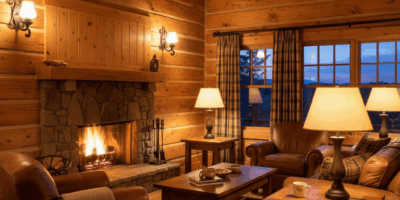
Accent lighting: This is where the magic happens. String lights, candles (real or quality LED), small lanterns. And a fireplace — even an electric one — provides both light and a natural focal point that nothing else quite matches. Our bedroom has a small electric fireplace insert, and turning it on in the evening changes the entire mood of the room.
Creating a Focal Point
Every bedroom needs something your eyes go to first. In a cabin, you’ve got great options:
Fireplace: Stone or brick, it anchors the room and provides real warmth plus visual interest. If adding a wood-burning fireplace isn’t feasible (or legal in your area), electric fireplaces have gotten genuinely good in recent years. Not perfect, but good.
Feature wall: Reclaimed wood, shiplap, or log rounds behind the bed create immediate impact. Easier to install than a fireplace and often just as striking.
Windows: If you’ve got a view, let it do the work. Large windows framing trees, mountains, or water are living artwork that changes with the seasons. Keep window treatments minimal — you don’t want to frame a masterpiece and then cover it up.
Dramatic bed: A substantial headboard in log or reclaimed wood can carry the room all by itself. Sometimes the simplest solution is the best one.
Furniture and Storage
Keep it consistent with the room’s personality:
- Nightstands: Tree-stump tables, log pieces, or solid wood with visible grain. Skip the matching laminate sets from furniture chains.
- Dressers: Solid wood with minimal hardware. Distressed finishes work, or deep-painted pieces in forest green or charcoal.
- Seating: A leather club chair or wood-framed chair with wool cushions creates a reading nook that you’ll actually use.
- Benches: A wood or leather bench at the foot of the bed adds storage and visual weight.
The common thread? Avoid anything that looks mass-produced or overly polished. Cabin style celebrates the handmade and the imperfect. A few honest pieces beat a room full of catalog furniture every time.
Decorative Accents
The small stuff matters more than people think:
- Textiles: Plaid blankets, wool throws, fur or faux-fur accents layered on surfaces
- Artwork: Vintage maps, wildlife prints (good ones, not kitschy ones), landscape photography, folk art
- Mirrors: Frames in reclaimed wood, antler, or twig branches
- Plants: Low-maintenance options like ferns, succulents, or arrangements of dried branches and wildflowers
- Collections: Vintage lanterns, old tools, handwoven baskets, natural finds like pinecones and interesting stones from walks
One word of caution: resist the urge to fill every surface. Cabin style values breathing room. A few well-chosen pieces with actual meaning make way more impact than a cluttered shelf of random rustic tchotchkes.
Practical Considerations
Heating: Cabin bedrooms often run cold, especially if they’re on a second floor or away from the main heat source. An electric fireplace, quality space heater, or small wood stove solves this while adding to the room’s character.
Flooring: Wide-plank wood floors are ideal. Layer area rugs for warmth underfoot — cowhide, wool, or woven options all work well. If you’re stuck with carpet, layering rugs on top introduces the texture you need.
Window treatments: Simple curtains in natural fabrics — linen, cotton, wool — or wooden blinds. Stay away from heavy drapes or anything shiny. You want light control, not a Victorian parlor.
Ceiling treatment: Exposed beams, wood planking, or vaulted ceilings enhance the cabin feel enormously. If you have a flat ceiling, decorative beams are worth considering. Looking up and seeing wood overhead ties the whole room together.
Modern Cabin vs. Traditional
Today’s cabin design runs a real spectrum. Traditional leans into wildlife themes, antler accessories, full log construction. Modern cabin strips back the decorative layers, focusing on clean lines, quality materials, and subtler rustic touches.
Neither approach is wrong — the key is picking a lane and committing to it. A room that’s trying to be half-modern and half-traditional usually ends up feeling confused rather than comfortable. Decide what resonates with you and build from there.
Starting Points
If you’re building a cabin bedroom from nothing, start with these five things:
- A quality wood bed frame or substantial headboard — this is your anchor
- Layered bedding in natural tones
- One statement light fixture that sets the mood
- A textured area rug underfoot
- Two or three decorative pieces that mean something to you
Build from there over time. The best cabin bedrooms aren’t assembled in a weekend from a catalog — they evolve, collecting objects that carry memories and meaning. That lived-in, gathered-over-time quality is what turns a decorated room into an actual retreat. And honestly, that’s the whole point.
Recommended Cabin Decor
HomeRustique Wooden Cabin Decor Set – $39.99
Rustic woodland wall decor with bear, deer and moose designs.
The Log Cabin Book: Complete Builder’s Guide – $13.68
Classic guide to building small homes and shelters.
As an Amazon Associate, we earn from qualifying purchases.