What Is That Black Stuff on Your Cabin Roof
Cabin roof blackening has gotten less clear-cut with all the horror stories flying around. You pull up for a long weekend, snap a photo, and there it is — dark streaks spreading across your shingles like someone dragged a wet mop along the ridge line. Panic is the natural response. Is the roof caving in? Do you need a $15,000 replacement?
This is the piece to know up front: most of the time, a cabin roof turning black is a cosmetic problem, not structural failure.
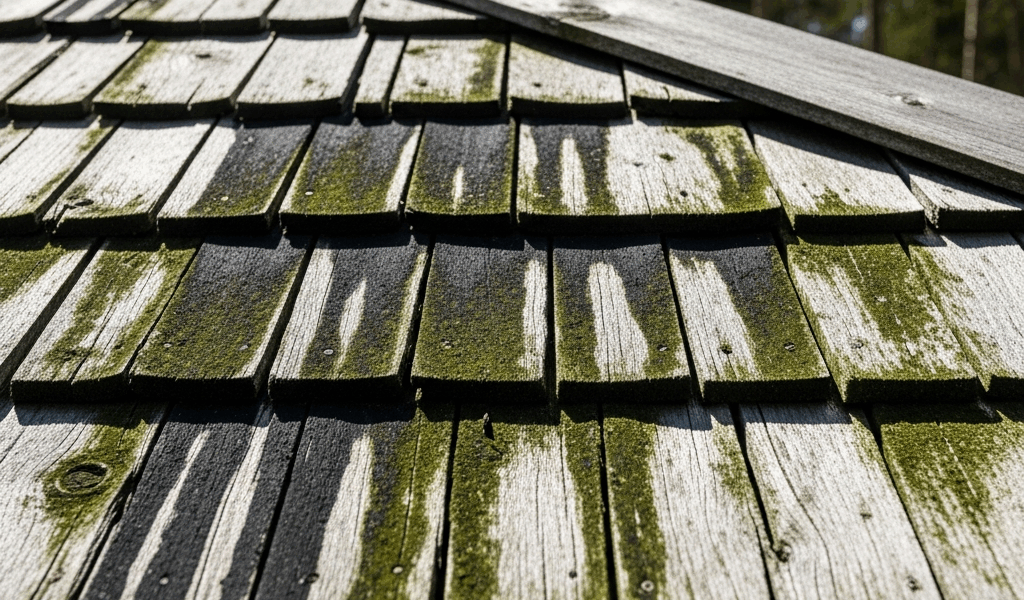
But what is that black stuff, exactly? In essence, it’s biological growth — algae, mold, mildew, or moss. But it’s much more than that, depending on your roof material. Gloeocapsa magma is the most frequent offender — a blue-green algae that thrives in humid, shaded spots. It feeds on the limestone filler packed into asphalt shingles and produces dark pigmentation as it spreads. Metal roofs get hit with mold and mildew streaks instead. Wood shakes develop moss that starts green but blackens as it ages, sheds spores, and settles in.
Wooded cabin locations make everything worse, faster. Surrounding trees keep your roof damp long after rain stops. Debris piles into valleys and gutters. The constant moisture and organic material create near-perfect conditions for algae to dig in. Pacific Northwest, Appalachia, anywhere with morning fog rolling through by 7 a.m. — you’re already in the high-risk zone.
The algae doesn’t actually eat the shingles themselves. It sits on top, ugly but initially harmless. Most cabin owners first notice it during late spring or early fall visits, when moisture peaks and the growth has had weeks to establish itself across the surface.
When Black Streaks Are a Warning Sign — Not Just Ugly
Here’s where the diagnosis matters more than the aesthetics. Some black staining is one cleaning session away from solved. Other cases signal real structural trouble forming underneath — and that distinction matters enormously before you grab a sprayer.
Spend two minutes doing a proper visual inspection before committing to anything. Grab a pair of binoculars if getting on the roof safely isn’t an option. Here’s what to look for specifically:
- Lifted or curled shingles — Moss creates moisture pockets underneath that cause shingles to cup upward. Water follows. The roof starts failing from below before you notice anything dramatic from the ground.
- Soft spots or sponginess — Press gently with a long stick from the ground level. Decking that gives or feels spongy means rot has already set in. That’s a professional repair job, not a cleaning afternoon.
- Active moss with thick carpet texture — Thin algae streaks are cosmetic. Moss thick enough to actually pinch between your fingers means moisture is being trapped against the roof surface on a consistent basis. That accelerates deterioration fast.
- Staining that persists after heavy rain — True algae and mold rinse off eventually with enough water. Staining that stays put suggests actual discoloration of the shingles or decking — often from moisture that’s been sitting trapped longer than it should.
- Granule loss in the stained areas — Run your hand across a clean section, then a stained one. If the stained areas feel smoother, that protective grit layer is already gone.
If you spot soft decking, lifted shingles, or moss you could practically harvest — call a roofer before anything else. Scrubbing won’t fix structural damage. It’ll waste your Saturday and potentially scatter spores further down the slope.
How to Clean Algae and Black Stains Off a Cabin Roof
As someone who has cleaned three separate cabin roofs over the past decade, I put in the hours studying what works and what quietly creates a $5,000 problem. Today, I will share it all with you.
DIY roof cleaning absolutely works when you’re dealing with algae or mold on sound shingles. All three of my projects came out looking essentially new — no contractor invoice required.
The most reliable solution is a 50/50 bleach-and-water mixture. One gallon of standard household bleach — I usually grab Clorox from the hardware store, nothing fancy — mixed with one gallon of water covers roughly 500 square feet from a pump sprayer. Some cabin owners swear by Wet and Forget, the commercial spray-and-walk-away product. Both work. Bleach works faster if you need results before next weekend’s guests arrive.
The process is straightforward but timing matters:
- Pick an overcast day. Direct sun causes bleach to evaporate before it kills anything useful. Above 50°F, ideally below 85°F.
- Wet everything surrounding the roof first. Soak the landscaping, the gutters, any plants directly below the drip line. Bleach runoff will kill vegetation without any warning whatsoever.
- Apply generously, top to bottom. Spray across stained areas working downhill so the solution runs naturally. Complete saturation isn’t required — partial coverage still kills the algae effectively.
- Let it sit for 15–20 minutes. You’ll see streaks fading almost immediately. Patience genuinely pays off more than scrubbing ever does.
- Rinse with a standard garden hose. Gentle rinse only. Not pressure washing — think light shower, not fire hose. High pressure strips granules from asphalt shingles and manufactures an entirely new problem.
- Inspect and repeat if needed. One application clears most algae. Stubborn moss might need a second round seven to ten days later.
Don’t pressure wash your cabin roof. Steer clear of where I went wrong. Before I owned my cabin, a tenant on a rental property I managed hired someone who ran 3,000 PSI across asphalt shingles. The roof looked immaculate afterward. Granule loss was catastrophic. Water started finding its way in within two seasons. That $300 “professional” cleaning created a $5,000 repair bill. I’m apparently someone who has to learn things twice, and a pressure washer on asphalt never works the way people expect it to.
Safety note — at least if you value being able to walk next week: cabin roofs are sloped, often high, and frequently still damp. Use a rope harness if you’re going up personally. Many cabin owners hire this out for $200–$400 and consider it money genuinely well spent. Hard to argue with that math.
How to Stop Black Stains From Coming Back
Cleaning handles today’s problem. Prevention handles every problem after that. That’s what makes a solid maintenance routine endearing to us cabin owners who only visit on weekends and can’t babysit a roof year-round.
The free option is branch trimming. Overhanging trees drop debris constantly and kill airflow. Removing lower branches — I took off everything within about six feet of the roofline on my south-facing side — increases circulation and sunlight exposure, which naturally suppresses algae growth. That was roughly five years ago. That side of the roof hasn’t shown a single streak since.
The cheap option is a zinc or copper strip installed along the ridge line. Heavy rain dissolves tiny amounts of zinc, releasing ions that kill algae before it establishes a foothold. A 50-foot copper strip runs $40–$60 at most hardware stores and lasts somewhere between five and ten years. Weekend DIY project if you’re comfortable on a ladder. Otherwise, a roofer installs them for $150–$300. The payoff is five to seven years of algae suppression without thinking about it again.
The permanent option is algae-resistant shingles when your roof eventually needs replacement. CertainTeed and GAF both offer shingles with copper granules embedded in the surface that actively resist algae colonization. You’ll pay roughly 10–15% more upfront — but essentially eliminate black streaking across the roof’s full 20–25 year lifespan. Worth the math when you run it out.
Cabin Roof Materials That Are Most Prone to Blackening
Your specific roof material determines both why blackening happens and which prevention approach actually works.
Asphalt shingles are the most vulnerable by a significant margin. The limestone filler algae feeds on makes them nearly ideal hosts. Any cabin with asphalt shingles sitting in a humid climate will face algae eventually — it’s less a question of whether and more a question of when. Bleach cleaning works well. Zinc strips or trimmed branches keep it from coming back.
Metal roofs don’t offer algae much to feed on, but they’re prone to mold and mildew streaks in persistently wet climates. These darken differently — usually vertical streaks running where water travels downhill. Metal sheds algae more easily with rain than asphalt does, but mold staining sticks around longer once it establishes. Bleach cleaning works here too. Zinc strips help less since mold isn’t algae and doesn’t respond the same way.
Wood shakes develop thick moss quickly, thanks to retained moisture and abundant organic material. Moss on wood shakes might be the best warning sign to take seriously, as wood roofing requires immediate attention when moss appears. That is because moss accelerates rot in wood in ways algae simply never does to asphalt — the damage compounds fast and quietly. Cleaning helps, but aggressive branch trimming and improved ventilation matter more here than any product you can spray on.
Your cabin roof turning black is almost certainly fixable. Know what you’re actually looking at, clean it correctly, and invest in the simple prevention measures that cost almost nothing compared to a full replacement. Weekend problem — not season-ending crisis.


Stay in the loop
Get the latest rustic cabin world updates delivered to your inbox.