{
“@context”: “https://schema.org”,
“@type”: “Article”,
“headline”: “Building a Wood Cabin: Material Costs & Best Designs for 2025”,
“description”: “Complete breakdown of wood cabin material costs, construction types, and design options. Compare log cabins, timber frames, and stick-built designs with pricing for 2025.”,
“image”: “https://rusticcabinworld.com/wp-content/uploads/cabin-building.jpg”,
“author”: {
“@type”: “Person”,
“name”: “James Thompson”
},
“publisher”: {
“@type”: “Organization”,
“name”: “Rustic Cabin World”,
“logo”: {
“@type”: “ImageObject”,
“url”: “https://rusticcabinworld.com/wp-content/uploads/logo.png”
}
},
“datePublished”: “2025-11-22”,
“dateModified”: “2025-11-22”,
“mainEntityOfPage”: {
“@type”: “WebPage”,
“@id”: “https://rusticcabinworld.com/charming-wood-cabins-cozy-havens-in-nature/”
}
}
{
“@context”: “https://schema.org”,
“@type”: “FAQPage”,
“mainEntity”: [
{
“@type”: “Question”,
“name”: “How much does it cost to build an 800 sq ft cabin?”,
“acceptedAnswer”: {
“@type”: “Answer”,
“text”: “Building an 800 sq ft cabin costs $90,000-$250,000 total depending on construction type and finishes. Materials range from $48,000 (cabin kit) to $200,000 (handcrafted log). Add foundation ($10,000-$30,000), utilities ($20,000-$50,000), and interior finishes ($15,000-$40,000). Budget builds: $90,000-$140,000. Premium builds: $150,000-$250,000+.”
}
},
{
“@type”: “Question”,
“name”: “What is the cheapest way to build a cabin?”,
“acceptedAnswer”: {
“@type”: “Answer”,
“text”: “Log cabin kits are the cheapest at $60-$120/sq ft ($48,000-$96,000 for 800 sq ft materials). Conventional stick-frame with wood siding is also affordable at $80-$150/sq ft. Acting as owner-builder and sourcing local lumber saves 30-50% on labor costs. Starting with a smaller 400-600 sq ft cabin and expanding later spreads costs over time.”
}
},
{
“@type”: “Question”,
“name”: “What type of wood is best for cabin construction?”,
“acceptedAnswer”: {
“@type”: “Answer”,
“text”: “Western Red Cedar is best for humid climates due to excellent rot resistance. Douglas Fir is ideal for structural beams (very strong). Eastern White Pine offers good value for traditional log cabins. Cypress excels in southern/swampy areas with natural insect resistance. For budget builds, Spruce is affordable but needs treatment for longevity.”
}
},
{
“@type”: “Question”,
“name”: “Is it cheaper to buy a cabin kit or build from scratch?”,
“acceptedAnswer”: {
“@type”: “Answer”,
“text”: “Cabin kits are typically cheaper upfront ($60-$120/sq ft vs $100-$250/sq ft for custom builds) and faster to assemble. However, you still need foundation, utilities, and finishing work. Kits work best for DIYers with basic carpentry skills. Custom builds offer more flexibility but cost 30-50% more and take longer.”
}
},
{
“@type”: “Question”,
“name”: “How long does a log cabin last?”,
“acceptedAnswer”: {
“@type”: “Answer”,
“text”: “Handcrafted full-scribe log cabins last 50-100+ years with proper maintenance. Milled log cabins last 40-80 years. Cabin kits typically last 30-60 years. Lifespan depends on wood species, climate, and maintenance. Regular staining/sealing every 3-5 years and chimney cleaning extends cabin life significantly.”
}
}
]
}
The True Cost of Building a Wood Cabin in 2025
Building a wood cabin has gotten complicated with all the kit companies, timber frame packages, and contractor estimates flying around. As someone who’s been through the budgeting process (and watched it go sideways), I learned everything there is to know about what things actually cost versus what the brochures claim. Wood prices have stabilized somewhat after the wild swings of 2021-2022, but they’re still running 30-50% above pre-pandemic levels. Knowing what to expect upfront prevents the kind of budget overruns that derail projects midway through.

What follows is a real breakdown of material costs for different cabin designs, a comparison of wood types, and honest guidance on choosing the right materials for your budget and climate. No sugar-coating.
Wood Cabin Material Cost Comparison (2025 Pricing)
| Material Type | Cost per Sq Ft | Cost for 800 Sq Ft Cabin | Durability | Best Climate |
|---|---|---|---|---|
| Handcrafted Log (Full-Scribe) | $150 – $250/sq ft | $120,000 – $200,000 | 50-100+ years | All (needs maintenance) |
| Milled Log (D-Log/Square Log) | $100 – $180/sq ft | $80,000 – $144,000 | 40-80 years | All (better insulation) |
| Timber Frame (Post & Beam) | $120 – $200/sq ft | $96,000 – $160,000 | 50-100+ years | All (excellent) |
| Log Cabin Kit | $60 – $120/sq ft | $48,000 – $96,000 | 30-60 years | Moderate climates |
| Conventional Stick-Frame (Wood Siding) | $80 – $150/sq ft | $64,000 – $120,000 | 30-50 years | All (flexible) |
| Modular/Prefab Cabin | $70 – $130/sq ft | $56,000 – $104,000 | 25-40 years | All (fast build) |
Note: These are materials-only costs. Labor, foundation, plumbing, electrical, and permits add 40-100% to total project cost. I know — that’s a wide range. It depends heavily on location and how much you do yourself.
Best Wood Types for Cabin Construction
| Wood Species | Cost Range | Rot Resistance | Insulation (R-value per inch) | Best Use |
|---|---|---|---|---|
| Eastern White Pine | $$ (Moderate) | Fair | R-1.25 | Traditional log cabins, easy to work with |
| Western Red Cedar | $$$ (High) | Excellent | R-1.33 | Humid climates, siding, decks, naturally rot-resistant |
| Douglas Fir | $$$ (High) | Good | R-1.25 | Structural beams, timber framing, very strong |
| Cypress | $$$ (High) | Excellent | R-1.20 | Southern cabins, swampy areas, insect-resistant |
| Spruce | $$ (Moderate) | Fair | R-1.25 | Budget-friendly, cabin kits, needs treatment |
| Oak (White/Red) | $$$$ (Very High) | Very Good | R-1.00 | Premium cabins, flooring, trim, extremely durable |
Top 5 Cabin Design Styles for 2025
1. Handcrafted Full-Scribe Log Cabin
Cost: $150-$250/sq ft | Best for: Premium builds, custom designs
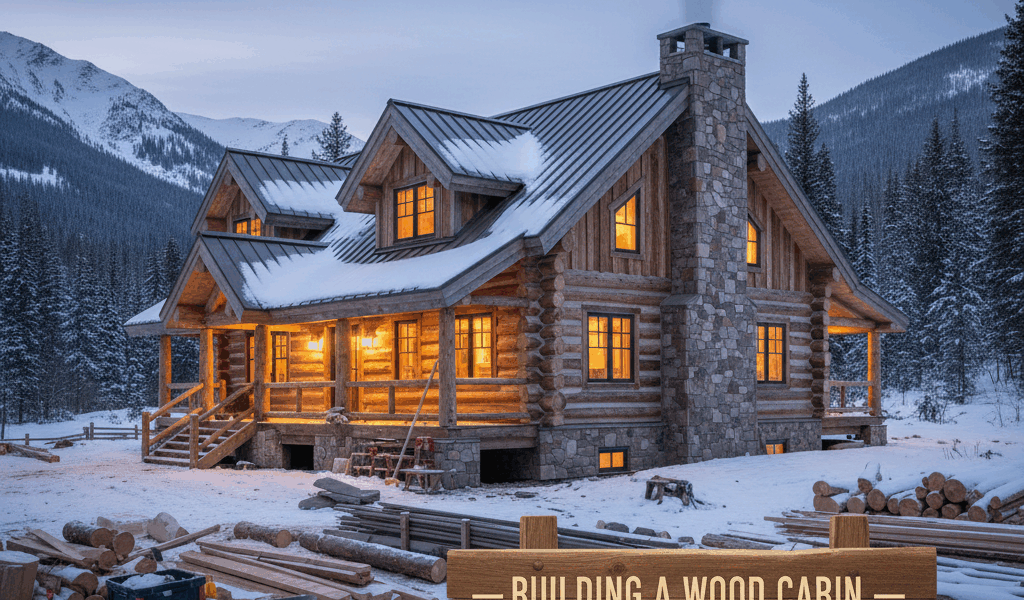
This is the top-shelf option. Full-scribe construction uses whole logs hand-fitted together with minimal gaps — each log scribed to match the one below it, creating tight seals without traditional chinking. It’s craftsmanship at the highest level, and the results show it.
Advantages:
- Stunning visual appeal with natural log contours
- Superior thermal mass (stays cool in summer, warm in winter)
- Minimal maintenance if properly sealed
- Extremely durable (can last 100+ years with care)
Drawbacks:
- Most expensive option by a significant margin
- Long build time (6-12 months is normal)
- Requires skilled log craftsmen — not your average contractor
- Logs settle over time, requiring settling jacks and patience
Material costs for 800 sq ft: $120,000-$200,000 (materials only)
2. Milled Log Cabin (D-Log or Square Log)
Cost: $100-$180/sq ft | Best for: Classic log look with better insulation
Milled logs are machine-cut to uniform dimensions. D-logs give you flat on the inside and rounded outside. Square logs are flat all around, closer to a timber-frame look. From what I’ve seen, this is the sweet spot for most people who want a real log cabin without full-scribe pricing.
Advantages:
- Uniform appearance with tight joints
- Better insulation than round logs (flat surfaces seal more tightly)
- Faster construction than handcrafted
- Less settling than full-scribe logs
Drawbacks:
- Less rustic character than handcrafted logs
- Still requires regular log maintenance (staining, sealing)
- Higher cost than stick-frame construction
Material costs for 800 sq ft: $80,000-$144,000
3. Timber Frame (Post & Beam)
Cost: $120-$200/sq ft | Best for: Open floor plans, dramatic interiors
That’s what makes timber frame construction endearing to us cabin folks — you get those massive exposed beams with the flexibility of modern wall systems. Large wooden posts and beams joined with traditional mortise-and-tenon joinery form the skeleton, then walls get filled with SIPs or conventional framing.
Advantages:
- Exposed beams create genuinely dramatic interior spaces
- Excellent insulation when using SIPs (R-20 to R-40)
- Open floor plans without load-bearing interior walls
- Energy-efficient and relatively low-maintenance
Drawbacks:
- High upfront cost
- Requires experienced timber framers
- Longer lead time for custom timber packages
Material costs for 800 sq ft: $96,000-$160,000
4. Log Cabin Kit
Cost: $60-$120/sq ft | Best for: DIY builders, budget-conscious projects
Kits include pre-cut logs or framing materials, often with tongue-and-groove assembly. Brands like Conestoga, Coventry, and Honest Abe have been doing this for years. If you’ve got basic carpentry skills and willing friends, a kit can save you serious money.
Advantages:
- Most affordable log cabin option
- DIY-friendly with instructions and phone support
- Faster build time (weeks instead of months)
- Predictable costs with less custom work to surprise you
Drawbacks:
- Limited customization options
- Materials aren’t as premium as custom builds
- You’ll probably still need pros for foundation, roofing, and utilities
- Shorter lifespan than premium log construction
Material costs for 800 sq ft: $48,000-$96,000
5. Conventional Stick-Frame with Wood Siding
Cost: $80-$150/sq ft | Best for: Budget builds, maximum insulation
Probably should have led with this section, honestly, because for pure value it’s hard to beat. Standard 2×4 or 2×6 framing with wood siding — board-and-batten, cedar shakes, or even log siding. Looks like a cabin on the outside, insulates like a modern home on the inside.
Advantages:
- Lowest cost per square foot
- Best insulation potential (R-19 to R-30 walls)
- Fast construction with readily available materials
- Easy to find contractors who know the methods
Drawbacks:
- Exterior maintenance needed (staining or painting every 5-10 years)
- Less thermal mass than actual log construction
- Doesn’t have that authentic log cabin feel from inside
Material costs for 800 sq ft: $64,000-$120,000
Hidden Costs Most Builders Forget
Material costs are just the opening act. Here’s what actually inflates your total budget — and almost everyone underestimates at least a few of these:
Foundation: $10,000 – $30,000
- Concrete slab: $10,000-$15,000 (cheapest, works on flat land)
- Crawl space: $15,000-$25,000 (common for uneven terrain)
- Full basement: $25,000-$40,000 (adds usable space though)
Roofing: $8,000 – $20,000
- Asphalt shingles: $8,000-$12,000 (25-year lifespan)
- Metal roof: $12,000-$20,000 (50-year lifespan, sheds snow better)
- Cedar shakes: $15,000-$25,000 (gorgeous but high maintenance)
Windows & Doors: $6,000 – $15,000
- Standard vinyl windows: $6,000-$10,000
- Energy-efficient triple-pane: $10,000-$15,000
- Large glass walls/sliding doors: add $5,000-$10,000
Plumbing & Electrical: $15,000 – $30,000
- Basic plumbing (well + septic): $10,000-$20,000
- Electrical (off-grid solar): $15,000-$30,000
- Grid connection: $5,000-$15,000 (if available)
Interior Finishes: $15,000 – $40,000
- Flooring: $3,000-$8,000
- Kitchen cabinets/appliances: $8,000-$20,000
- Bathroom fixtures: $3,000-$8,000
- Trim, paint, hardware: $3,000-$8,000
Total build cost for 800 sq ft cabin: $90,000 – $250,000+ depending on your choices. Big range, I know. That’s reality.
How to Save Money on Cabin Materials
1. Buy Local Lumber
Source logs or milled lumber from nearby sawmills. You’ll save 20-40% on transportation alone, and you’re supporting local businesses. Win-win.
2. Consider a Kit
Pre-cut materials eliminate waste and speed up assembly. If you can do some of the labor yourself, the savings add up quickly.
3. Use Reclaimed or Salvaged Materials
Reclaimed barn wood, vintage windows, salvaged fixtures — these add character while saving real money. Check Habitat for Humanity ReStores and local architectural salvage yards. I furnished half our cabin from estate sales and salvage places.
4. DIY Where You Safely Can
Owner-builders save 30-50% on labor. Hire professionals for the stuff that can kill you or flood your cabin (foundation, framing, electrical, plumbing). Do painting, flooring installation, and trim work yourself.
5. Start Small, Expand Later
Build a 400-600 sq ft cabin now, add a bedroom or loft later. Spreads costs over time and lets you live on-site during expansion. A lot of the best cabins I’ve visited grew over years, not all at once.
Best Designs for 2025: Trends Worth Watching
Modern Farmhouse Cabin
Blends rustic wood with clean lines, metal roofing, and generous windows. Black trim with white shiplap accents creates a contemporary cabin feel that photographs beautifully and lives even better.
A-Frame Revival
A-frames are having a serious moment, driven partly by social media and partly by their genuinely efficient use of space. That iconic silhouette is perfect for snowy climates — steep roof angles shed snow without you having to think about it.
Off-Grid Solar Cabins
Solar panels plus battery storage make remote cabins livable year-round. Pair with propane backup for heating during those cloudy stretches and you’ve got genuine energy independence.
Hybrid Timber Frame
Exposed beams in the main living areas combined with standard framing in bedrooms and utility spaces. You get the dramatic look where it matters without paying for full timber frame construction everywhere.
Final Recommendations
Best value overall: Stick-frame with wood siding ($80-$150/sq ft) — lowest cost, best insulation, fastest to build. Honestly, where most people should start.
Best for DIY builders: Log cabin kit ($60-$120/sq ft) — manageable for owner-builders with basic carpentry skills and a few helpful friends.
Best for authentic log aesthetics: Milled log cabin ($100-$180/sq ft) — classic look with modern efficiency, the middle ground that makes most people happy.
Best for luxury/custom builds: Handcrafted full-scribe ($150-$250/sq ft) — heirloom quality, one-of-a-kind. If budget allows, nothing compares.
Best for open floor plans: Timber frame ($120-$200/sq ft) — dramatic exposed beams, excellent insulation, design flexibility.
Building a wood cabin requires careful budgeting and honest self-assessment about what you can afford, what you can do yourself, and what trade-offs you’re willing to make. But with the right materials and design, you end up with something that fits your life and lasts for decades. Start by deciding what matters most to you — cost, aesthetics, or energy efficiency — and let that guide every decision from there.
Essential Building Guides & Construction References
Building a cabin takes knowledge that goes beyond basic carpentry. These guides have been around long enough to prove their worth, and they cover the real-world details that matter.
🪵 Log Construction Master Guide
The Log Cabin Book: A Complete Builder’s Guide
By Oliver Kemp
The most thorough guide to traditional log cabin construction I’ve come across. Takes you from selecting trees all the way through interior finishes.
Key topics:
- Tree selection and log preparation
- Notching techniques (saddle, dovetail, corner post)
- Foundation and floor systems
- Roof framing and shingling
- Chinking and weatherproofing
⭐ 4.5/5 stars | 240 pages | $13.46
🏗️ Complete DIY Guide
Log Cabins: The Complete Guide to Building Your Own
By William Anderson
Built for DIY builders. Step-by-step instructions with modern building codes and safety standards throughout.
Key topics:
- Material selection and budgeting
- Tool requirements and techniques
- Foundation types and installation
- Wall construction methods
- Insulation and weatherproofing
- Maintenance and repair
⭐ 4.3/5 stars | Kindle & Paperback
🔨 Budget Building Methods
Build a Log Cabin from Free Materials
By Robert Sims
For the shoestring budget crowd. Teaches sourcing free or near-free materials and building with what you can find. Essential reading for off-grid homesteaders.
Key topics:
- Finding free lumber and materials
- Salvaging and reclaiming wood
- Hand-tool construction methods
- Budget-friendly foundations
- DIY windows and doors
- Scavenging tips and resources
⭐ 4.0/5 stars | Great for budget builds
💡 Why Invest in Quality Building Guides?
Avoid costly mistakes: A single error in foundation work or roof framing can cost thousands to fix. These books pay for themselves by helping you sidestep the common beginner mistakes.
Pass inspections confidently: Code-compliant methods that satisfy building inspectors on the first visit, not the third.
Save on labor: DIY builders who follow professional guides save $30,000-$50,000 in labor costs on an 800 sq ft cabin.
Reference for years: These become go-to books you pull off the shelf for maintenance, repairs, and future additions.
Cabin Plan Packages with Complete Material Lists
Skip the guesswork and get professionally designed plans with exact material quantities for lumber, hardware, roofing, and everything else.
24×32 Cabin Plans
768 sq ft + loft | 2BR layout
Includes blueprints, material list, and instruction guide
16×24 Cabin Plans
384 sq ft + loft | Perfect starter
Includes blueprints, material list, and instruction guide
As an Amazon Associate, we earn from qualifying purchases at no additional cost to you. Prices and availability are subject to change.
📋 Free Download: Ultimate Cabin Planning Checklist
Get our comprehensive step-by-step checklist covering everything from land selection to move-in day. Includes budget worksheets, inspection schedules, and maintenance timelines.
Printable PDF-ready format | No email required
Continue Your Cabin Planning Journey
Building or owning a cabin requires planning across a bunch of different areas. These guides cover the rest:
📐 Small Cabin Floor Plans
Explore 5 proven floor plan designs under 1,000 sq ft with detailed cost breakdowns and layout comparisons.
🔥 Cabin Heating Systems
Compare wood stoves, heat pumps, and propane heaters. Find the most cost-effective heating solution for your cabin.
🪵 Building Materials & Costs
Complete breakdown of material costs for log cabins, timber frames, and stick-built designs in 2025.