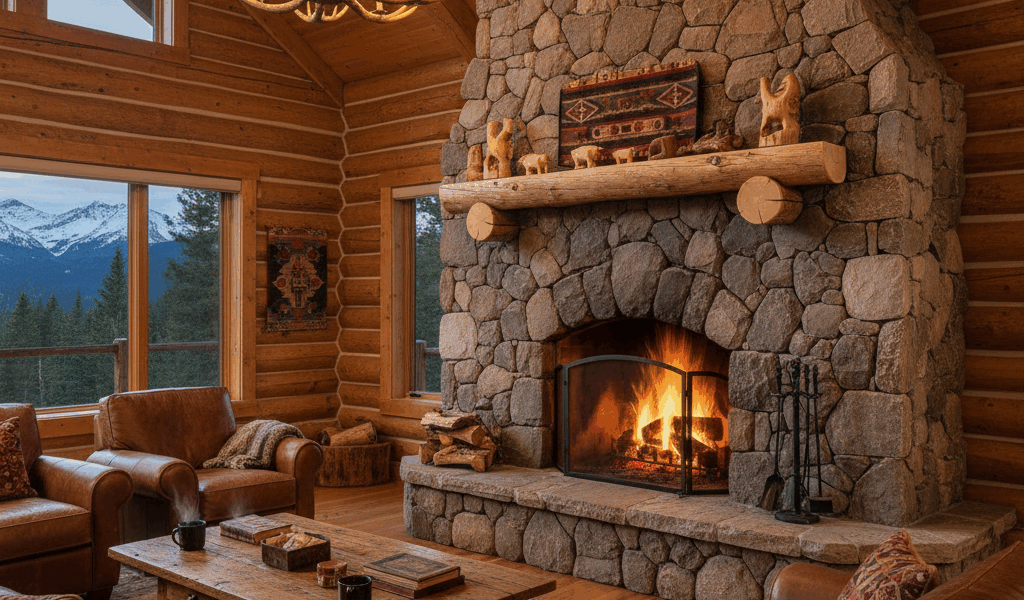
As someone who agonized over every stone choice for our cabin fireplace, I can tell you that a stone fireplace in a log cabin isn’t just a heating appliance—it’s the spiritual center of your home. Done right, it becomes the feature that defines every memory made within those walls. Done wrong, it’s an expensive mistake you’ll regret for decades. I learned everything the hard way before understanding what makes stone fireplaces work in log homes, and it requires thinking beyond aesthetics to the fundamental relationship between fire, stone, and timber.

Choosing Your Stone Speaks Volumes
The type of stone you select communicates something about your cabin and your values. River rock gathered from local streams creates an immediate connection to the surrounding landscape. Fieldstone pulled from nearby property carries the literal geology of your land into your living space. Manufactured stone offers consistency and cost savings but lacks the story that natural stone tells. That’s what makes natural stone endearing to us cabin owners who value authenticity.
Regional appropriateness matters more than most designers admit. A cabin in the Colorado Rockies looks right with rough-hewn granite. A Tennessee retreat calls for warm river stone. New England cabins pair naturally with fieldstone that matches the historic walls crossing the property. Importing exotic stone to “make a statement” often creates visual discord instead. Probably should have led with this: we almost shipped in stone from Arizona before someone talked sense into us.
Color temperature deserves careful consideration. Cool gray stones work in contemporary log homes but can feel sterile in traditional settings. Warm-toned stones in browns, tans, and soft reds create the welcoming atmosphere most cabin owners envision. The stone color should complement, not compete with, your log walls.
Proportions That Feel Right
The single most common fireplace mistake is building too small. A stone fireplace that looks adequately sized on paper often feels underwhelming when surrounded by massive log walls. The visual weight of log construction demands equally substantial stonework to achieve balance. Choosing the right fireplace proportions has gotten complicated with all the design options available now.
For great rooms with vaulted ceilings, plan for floor-to-ceiling stone. That dramatic sweep of masonry draws the eye upward and creates the “wow” moment every cabin owner dreams about. Stopping the stonework at mantel height in a two-story space creates an awkward visual truncation that nothing can fix later. We went floor-to-ceiling and never regretted it.
Hearth depth matters for safety and aesthetics. A properly proportioned hearth extends far enough to catch errant embers while providing seating space that invites gathering. Skinny hearths that meet code minimums look like afterthoughts. Plan for at least 20 inches of depth, more if space allows.
The Mantel Makes the Statement
Your mantel ties the stone work to the surrounding log architecture. Massive timber mantels—ideally cut from species matching your walls—create visual continuity that integrates the fireplace into the larger design. Live-edge slabs with natural character tell a story that milled lumber cannot match.
Placement height affects both aesthetics and functionality. Position the mantel too low, and displaying items becomes difficult. Too high, and the proportions look wrong. For most fireplaces, 54-58 inches from the floor to the bottom of the mantel strikes the right balance.
Don’t overlook the mantel’s structural requirements. A substantial timber mantel weighs hundreds of pounds and needs proper support within the stonework. Planning this support during initial construction is easy; retrofitting it later is expensive and disruptive. Trust me on this—we learned the hard way.
Firebox Design Decisions
The firebox itself requires decisions that affect performance for decades. Rumford-style fireboxes, with their shallow depth and angled back walls, radiate more heat into the room than conventional designs. They draw better, smoke less, and look more elegant. The downside is increased complexity during construction and fewer options for prefabricated inserts.
If you’re building a fireplace primarily for heat production rather than ambiance, consider designing for a high-efficiency insert from the beginning. Building the firebox to accommodate an insert preserves the aesthetic impact while dramatically improving the BTUs you actually capture from each fire.
Integration with Log Walls
Where stone meets log requires careful detailing. Log walls settle over time, sometimes by several inches. Stone doesn’t. This differential movement must be accommodated through slip joints and flexible connections that allow the logs to move without cracking the stonework or pulling it away from the wall.
Experienced log home masons understand these requirements. General contractors who’ve never built in log homes often don’t. Verify your mason’s log home experience before signing contracts. That’s what separates a fireplace that lasts generations from one that develops problems within years.
Building Your Legacy
A stone fireplace is likely the single most expensive feature you’ll add to your log cabin, but it’s also the one most likely to evoke emotion across generations. Your grandchildren will remember sitting before these flames. That’s not just masonry—it’s legacy. Invest accordingly, plan carefully, and build something worthy of the memories it will hold.

Stay in the loop
Get the latest rustic cabin world updates delivered to your inbox.