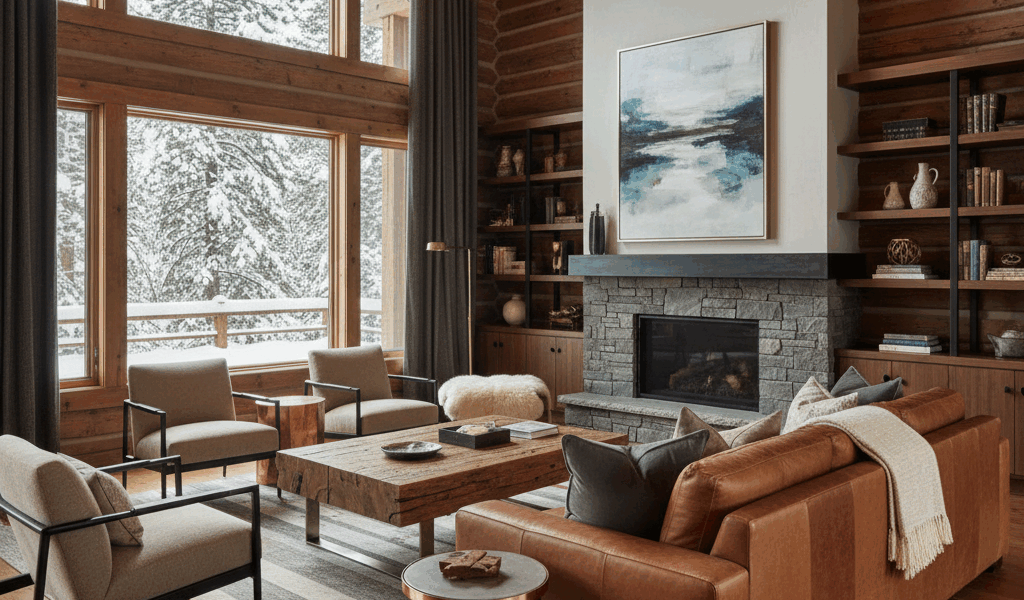
As someone who’s furnished two log homes now, I can tell you that the furniture debate triggers passionate camps on both sides. Traditional cabin purists insist on exclusively rustic pieces—twig furniture, rough-hewn tables, leather and antlers everywhere. Modern enthusiasts counter that clean-lined contemporary furniture creates dramatic contrast against log walls. I learned everything the hard way before realizing the truth is more nuanced than either camp admits, and the most successful interiors typically blend approaches rather than committing absolutely to either.

Understanding the Log Home Context
Log walls are visually powerful. The horizontal lines, natural color variations, and pronounced texture create a strong design statement before any furniture enters the room. That’s what makes furniture selection endearing to us cabin owners—it’s both easier and harder than conventional decorating.
Rustic furniture placed against rustic walls can disappear—too much of the same visual language competing for attention without any element emerging distinctively. Alternatively, very busy rustic pieces against busy log walls create chaotic interiors where the eye finds no rest. Probably should have led with this: my first attempt at furnishing looked like a hunting lodge exploded.
Modern furniture against logs creates instant contrast that can read as either sophisticated tension or jarring disconnection, depending on execution. The logs emphasize the furniture’s clean lines; the furniture emphasizes the logs’ organic character. When this dialogue works, it’s stunning. When it fails, the room feels like a furniture showroom mistakenly staged in a hunting lodge.
What Actually Works: The Hybrid Approach
The most livable log home interiors I’ve seen—and the one I finally achieved myself—feature a foundation of comfortable, quality furniture in neutral colors and relatively simple lines, accented with selected rustic pieces that provide character without overwhelming the space.
A leather Chesterfield sofa works beautifully in log settings—traditional enough to feel appropriate, refined enough to avoid rustic overload. Paired with a live-edge coffee table and a simple contemporary side chair, you’ve created a conversation area that honors the cabin context without becoming costume.
Dining areas particularly benefit from mixing. A substantial rustic table with modern chairs creates visual interest that all-matching sets cannot achieve. The table anchors the room in cabin tradition while chairs introduce contemporary comfort and cleanness. This is what we ended up doing, and guests always comment on how well it works.
Scale Matters More Than Style
Whatever aesthetic direction you choose, furniture must suit the scale of log construction. Delicate pieces that work in conventional homes look fragile and uncomfortable against massive timber. The visual weight of surrounding logs demands furniture with substance.
This doesn’t mean everything must be oversized—but it does mean avoiding spindly legs, thin profiles, and diminutive proportions. A modern sofa can work perfectly if it has sufficient depth, substantial arms, and visual presence. The same design in a smaller scale would look lost.
Ceiling height influences scale calculation. Great rooms with two-story vaulted ceilings need larger furniture than rooms with standard eight-foot ceilings. The increased vertical volume changes spatial relationships in ways that affect furniture proportions. Choosing furniture for log homes has gotten complicated with all the options out there now, but getting scale right matters most.
Color and Material Considerations
Log walls typically present warm tones—honey, amber, brown, with reddish or golden undertones depending on species and finish. Furniture that complements this warmth rather than fighting it integrates more successfully.
Leather in cognac, saddle, or chocolate tones creates harmony with most log species. Neutral fabric in cream, camel, or gray provides versatile backdrops that don’t compete with wall color. Avoid cool colors that clash with warm wood tones unless you’re deliberately seeking tension.
Metal accents in warm finishes—brass, bronze, weathered steel—feel more appropriate than chrome or brushed nickel in most log interiors. This preference isn’t absolute, but warm metals do integrate more naturally. My chrome lamp from my city apartment never looked right until I replaced it with a bronze version.
The Practical Test
Beyond aesthetics, furniture in log cabins must handle actual cabin use. Muddy boots, wet dogs, grandchildren with art projects, guests who spill wine—cabin life is harder on furniture than climate-controlled suburban living.
Performance fabrics that resist staining and clean easily matter more than brand prestige. Frames that tolerate humidity variations without joint failure outlast finicky construction. Leather that ages gracefully serves better than leather that requires coddling.
These practical considerations sometimes argue for rustic pieces that hide wear as character development. A rough-hewn coffee table that shows another ring mark simply gains personality. A pristine lacquered surface shows every blemish as damage. Trust me on this—our first coffee table was replaced within two years.
Creating Your Own Language
The best cabin interiors reflect their owners rather than reproducing design magazine photographs. Your furniture should support how you actually live—the way you entertain, the activities you pursue, the comfort you require.
If you love modern design, incorporate it without apology. If rustic simplicity speaks to your soul, honor that preference. If mixing traditions intrigues you, experiment freely. The log walls themselves provide enough context that your furniture choices have wide latitude to express individual personality.
There is no objectively correct answer. There’s only the answer that makes your cabin feel like home—furniture that welcomes you after a long drive, supports your gatherings, and ages alongside your family’s memories.


Stay in the loop
Get the latest rustic cabin world updates delivered to your inbox.