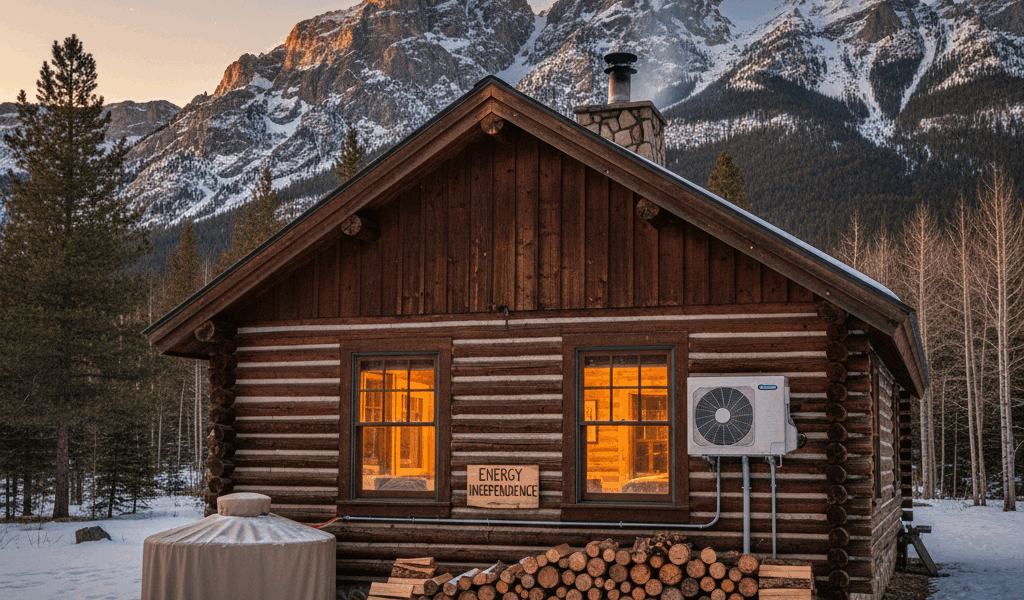
As someone who’s lived off-grid through multiple winters now, I can tell you that heating an off-grid cabin presents challenges that grid-connected homeowners never consider. You can’t just turn up the thermostat and forget about it. Every BTU matters, and your heating system needs to work when the power is out, the roads are impassable, and help is hours away. I learned everything the hard way, and after years of living this reality, the conclusions might surprise you.

The Contenders in This Showdown
Most off-grid cabin owners eventually narrow their choices to three primary options: wood stoves, propane systems, and pellet stoves with battery backup. Each has passionate advocates, and each has legitimate strengths. But only one approach emerges as the clear winner for true off-grid independence. Probably should have led with this: it’s not what most people expect.
Wood Stoves: The Traditional Champion
There’s a reason wood heat has warmed cabins for centuries. A quality wood stove requires no electricity, no delivery trucks, and no monthly bills if you’re willing to cut and process your own fuel. The independence factor is unmatched. When everything else fails, wood keeps burning. That’s what makes wood heat endearing to us off-grid cabin owners.
The downsides are real, though. You need dry, seasoned wood—ideally prepared a full year before burning. Green wood creates creosote buildup that causes chimney fires. You’re also tied to the stove. Leave for a weekend in January, and you’ll return to frozen pipes unless you’ve drained the entire system.
Physical demands shouldn’t be underestimated either. Cutting, splitting, stacking, and hauling several cords of wood annually is genuine labor. As we age, this equation changes. What feels manageable at 45 might be impossible at 65. I’m already planning for this transition.
Propane Systems: Convenience at a Cost
Propane offers the convenience of conventional heating without requiring grid connection. Direct-vent propane heaters need no electricity and provide reliable, thermostat-controlled warmth. Install a large enough tank, and you can heat all winter with a single fill.
The problems surface during actual off-grid living. Propane prices fluctuate wildly. Delivery trucks can’t reach remote properties during heavy snow. You’re dependent on a supply chain you don’t control. Choosing your heating approach has gotten complicated with all these variables involved. That dependency feels acceptable until you’re watching your tank gauge drop while the delivery company says they can’t make it for two more weeks. Been there.
Propane also creates ongoing costs that never end. Unlike wood, which you can harvest from your own property, every BTU from propane requires writing a check to someone else.
Pellet Stoves: The Modern Compromise
Pellet stoves promised the best of both worlds—wood-based fuel with thermostat convenience. In grid-connected homes, they deliver on this promise. The hoppers hold enough pellets for days of unattended operation, and the controlled combustion is remarkably clean and efficient.
For off-grid applications, the fatal flaw is electricity dependence. Pellet stoves require power for the auger that feeds pellets and the fan that distributes heat. Battery backup systems exist, but they add cost and complexity. During extended power outages—exactly when you need heat most—pellet stoves often sit useless.
Pellet availability also creates supply chain dependency. Those convenient bags of pellets come from factories that can have production problems, distribution delays, and regional shortages. The winter of 2022 taught many pellet stove owners hard lessons about supply chains.
The Surprise Winner: Hybrid Approach
Here’s what experienced off-grid cabin owners actually do: they install a quality wood stove as their primary heat source, backed by a direct-vent propane heater for specific situations. This is what I finally settled on, and I wish I’d done it from the start.
The wood stove handles daily heating when you’re present and active. It’s free fuel, satisfying work, and provides cooking and hot water capabilities during extended outages. The propane heater maintains minimum temperature when you’re away, preventing freeze damage without requiring someone to tend a fire.
This combination costs more upfront but provides genuine resilience. You’re not dependent on any single fuel source, supply chain, or technology. When propane runs low, wood takes over. When wood supply is compromised, propane bridges the gap.
Making Your Decision
Pure wood heat wins on independence but loses on convenience and physical demands. Pure propane wins on convenience but creates dangerous dependencies. The hybrid approach respects the realities of off-grid living while providing the flexibility to handle whatever winters throw at you.
Your specific situation matters. If you’re young, healthy, and have abundant timber on your property, wood-only might work for decades. If you’re building a seasonal cabin you’ll leave empty for months, propane’s thermostat control is nearly essential. Most off-grid owners eventually arrive at some version of the hybrid solution—because real-world cabin life rarely fits neatly into single categories.
Recommended Heating Products
If you’re ready to implement the hybrid heating approach, here are reliable options that cabin owners consistently recommend:
Wood Stove Option
US Stove Company Cast Iron Wood Stove (US1269E)
A rugged cast iron stove that heats up to 900 sq. ft. with 54,000 BTUs. Designed specifically for log cabins, it accepts logs up to 19 inches long. The cool-touch safety handle and heavy-gauge construction make it a solid choice for off-grid heating.
Direct-Vent Propane Backup
Rinnai EX22DTP Direct Vent Wall Furnace
A premium 20,700 BTU propane heater that requires no electricity. The programmable thermostat maintains minimum temperature when you’re away, preventing frozen pipes. Whisper-quiet operation (42 dB) and cool-to-touch cabinet make it safe for any room. Rinnai’s modulating technology eliminates cold spots.
Essential Maintenance
SootEater Rotary Chimney Cleaning System
Regular chimney cleaning prevents dangerous creosote buildup. This kit includes flexible rods that reach up to 18 feet and works from ground level—no dangerous roof climbing required. Fits round flues 5-18 inches and square flues up to 12×12 inches. Essential for any wood stove owner.
As an Amazon Associate, we earn from qualifying purchases at no additional cost to you.

Stay in the loop
Get the latest rustic cabin world updates delivered to your inbox.