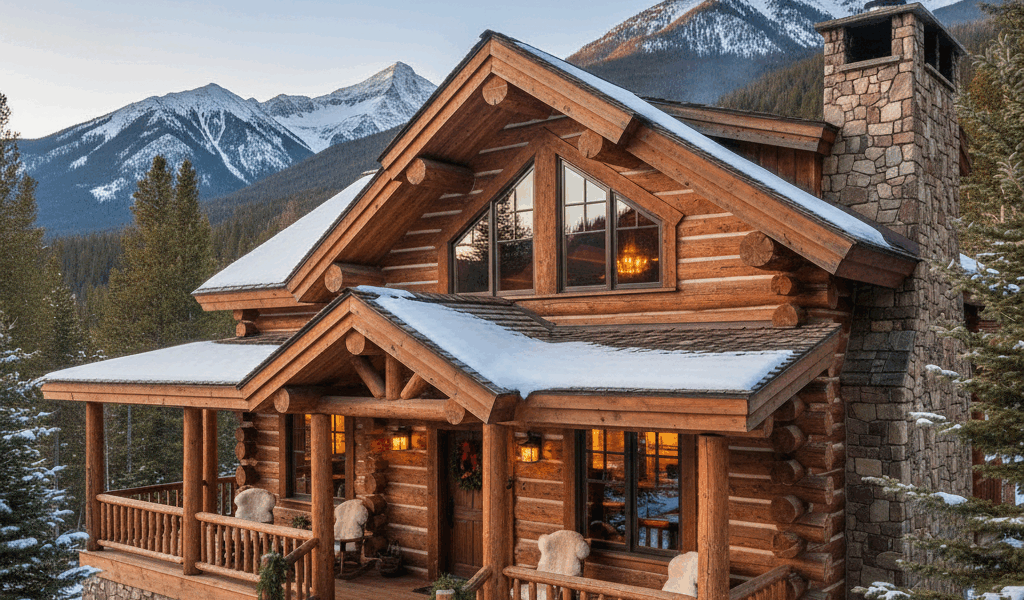
This article contains affiliate links. We may earn a commission at no extra cost to you.

Log cabin construction has gotten complicated with all the modern methods and material choices flying around. But at its heart, this is still about stacking wood and making shelter — something humans have been doing for centuries. Understanding the fundamentals helps whether you’re building from scratch or fixing up an old cabin that needs some love.
Types of Log Construction
Full-Scribe Log Homes
This is the high-craft approach. Each log gets individually hand-scribed to fit precisely against the one below it, creating tight seals without needing chinking material between them. It requires a skilled craftsman — not someone who watched a few videos and bought a chainsaw — but the results are exceptional. The logs nestle together like puzzle pieces, and a well-scribed wall is genuinely a work of art.
Chinked Log Cabins
Logs go up with intentional gaps between them, and those gaps get filled with chinking material. This is probably the most common method for a reason: it’s more forgiving of varying log sizes and shapes, and modern synthetic chinking does an excellent job of weatherproofing. If your logs aren’t perfectly uniform (and natural logs rarely are), chinked construction works with that reality instead of fighting it.
Post and Beam Construction
Large timber posts and beams form the structural skeleton, and then walls can be filled with all sorts of materials — log siding, SIPs panels, conventional framing, you name it. That’s what makes post and beam endearing to us cabin folks — the flexibility. You get that massive-timber look and feel while keeping your options open on wall construction. It’s a hybrid approach that’s grown really popular in the last couple decades.
Essential Log Cabin Care
Protect your log cabin investment with quality finishes. HOPE’S Pure Tung Oil penetrates deep into wood fibers, providing natural protection that enhances the beauty of log surfaces inside and out.
Building Tips
Plan for your specific climate, not some generic national average. Choose materials that can handle what your region throws at them. And think about maintenance from day one — every choice you make during construction either simplifies or complicates your upkeep for years to come.
Foundation Options
Full basements give you storage and protect against ground moisture, but they’re the most expensive option. Crawl spaces work well in milder climates where you don’t need the extra space below. Pier foundations are great for sloped sites and save real money on excavation — just make sure they’re engineered properly for your soil conditions and frost depth.
Log Selection
Cedar and cypress naturally resist decay, which means less chemical treatment and longer life. Pine and fir are the affordable workhorses — readily available, easy to work with, and perfectly good for cabin construction with proper finishing. Standing dead timber is worth looking into if you can source it — the logs are already dry and stable, with a weathered character you can’t fake.
Maintenance Planning
I’ll be straightforward about this: log cabins need regular attention. Annual inspections, periodic staining and sealing, and immediate response to any moisture issues. Rot doesn’t wait for you to get around to it. Build a maintenance routine into your ownership from the very beginning, and your cabin will reward you with decades of solid performance. Ignore it, and things get expensive fast.