As someone who’s maintained the same cabin for fifteen years now, I can tell you that log cabins reward attentive owners with decades of service—and punish neglect with expensive failures that proper maintenance would have prevented. I learned everything the hard way before establishing a systematic approach that addresses everything at appropriate intervals rather than reacting to problems after they’ve become serious. This annual schedule catches issues early while they’re still manageable.
Spring: Recovery from Winter
Spring maintenance focuses on assessing winter damage and preparing for the active season. As snow melts and temperatures moderate, I walk the entire exterior looking for issues that developed during cold months. That’s what makes spring opening so critical—you’re essentially surveying what winter did to your cabin.
Inspect all logs for new checking—the cracks that develop as wood expands and contracts with temperature and moisture changes. Small checks are cosmetic and can be addressed during regular staining. Larger checks that could channel water into log cores need caulking or chinking repair before spring rains begin. I found a check last spring that had opened up enough to fit my finger in. Caught it just in time.
Examine the roof carefully. Ice dams may have lifted shingles or damaged flashing. Snow loads might have stressed rafters. Clear accumulated debris from roof surfaces, clean gutters and downspouts, and verify that drainage directs water well away from foundation and log walls.
Check staining condition on sun-exposed walls, particularly south and west faces. UV degradation accelerates in late winter when sun angle increases while snow reflects additional radiation onto walls. Plan for touch-up or complete re-staining if protection has deteriorated. My south wall needs attention twice as often as the north—probably should have led with this detail when my neighbors asked why their cabin was fading unevenly.
Service your water system if it was winterized. Reconnect supply lines, check for freeze damage at fittings and fixtures, and pressurize the system while watching for leaks. Turn on the water heater only after confirming the tank has filled completely.
Summer: Active Preservation
Summer provides optimal conditions for exterior maintenance tasks that require dry weather and moderate temperatures. Scheduling cabin maintenance has gotten complicated with all the different products and their specific requirements, but summer remains the sweet spot for most exterior work.
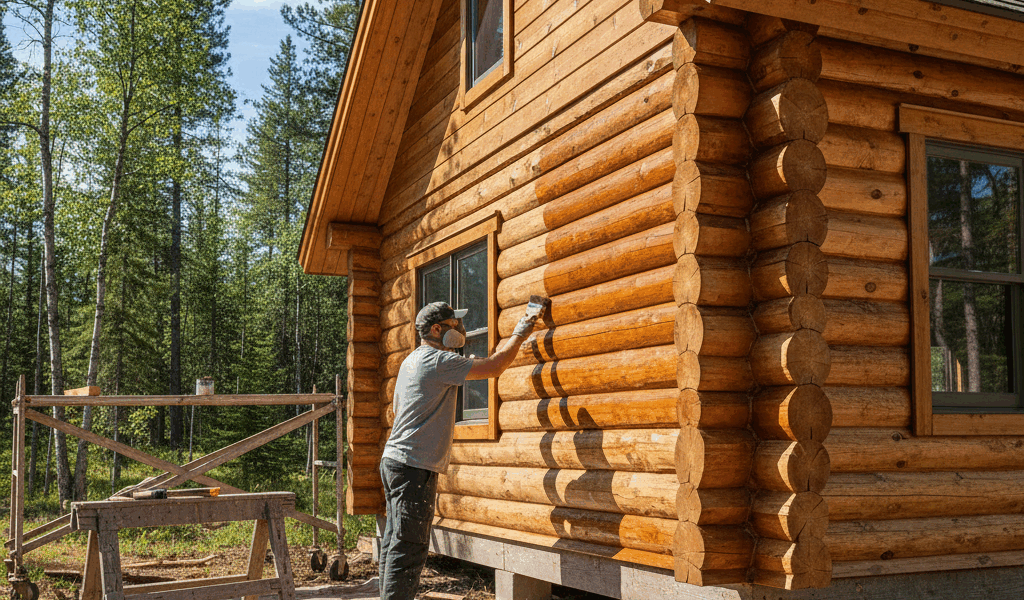
Execute staining projects during summer months. Log stains apply best when temperatures range between 50 and 80 degrees, humidity is moderate, and rain isn’t imminent. Complete cleaning—typically using a log wash solution and possibly light sanding—before applying fresh stain. I block out a full week each July for this work.
Address chinking and caulking repairs. These products also require appropriate temperatures and dry conditions for proper adhesion and cure. Work systematically around the cabin, ensuring complete coverage without gaps that could admit water or insects.
Treat the deck and any exterior wood elements that need maintenance. Power washing removes accumulated grime; staining or sealing protects for another season. Pay particular attention to horizontal surfaces that take the most weather abuse.
Clear vegetation from foundation and log walls. Plants growing against the cabin trap moisture and create paths for insects. Maintain at least three feet of clearance between vegetation and walls. Trim overhanging branches that drop debris on roofs or create pest highways. I spent years fighting carpenter ants before realizing the birch tree touching my roof was their highway directly into my cabin.
Fall: Winter Preparation
Fall maintenance prepares the cabin to withstand another winter cycle. Complete these tasks before temperatures drop and access becomes difficult.
Inspect the chimney if you heat with wood. Creosote accumulation creates fire risk; professional cleaning removes this hazard. Examine the cap, spark arrestor, and flashing for damage. Verify that the damper operates smoothly. I have my chimney swept every fall without exception—the peace of mind is worth every penny.
Service heating systems before you need them. Have propane systems inspected. Clean or replace furnace filters. Test backup heating sources. Ensure adequate fuel supplies for the heating season.
Winterize outdoor plumbing—hose bibs, irrigation systems, outdoor showers. Drain lines that could freeze and burst. Insulate exposed pipes that must remain in service.
Clean gutters again after leaf drop. Clogged gutters cause ice dams that damage roofs and create moisture problems in walls below. This task is easy now and impossible once snow arrives.
Check weather stripping around doors and windows. Replace worn seals before cold weather makes energy loss expensive and comfort impossible.
Winter: Monitoring and Protection
Winter maintenance is primarily about monitoring rather than active intervention. If you’re using the cabin, regular attention prevents small problems from becoming emergencies.
Monitor snow loads on roofs, particularly in heavy snow years. Most roof structures handle normal accumulation, but exceptional snowfall can exceed design loads. Rake roofs if accumulation approaches concerning levels. I keep a roof rake at the cabin specifically for this purpose.
Watch for ice dam formation at eaves. Improving attic insulation and ventilation provides long-term solutions, but immediate intervention with calcium chloride ice melt can prevent active damage.
Keep heat trace systems operating on vulnerable plumbing. Verify that minimum temperatures are being maintained in spaces containing pipes.
If the cabin will be unoccupied during severe cold, complete winterization procedures or arrange for someone to check regularly that heating systems are functioning. My neighbor’s burst pipe last January could have been prevented with a single visit during that cold snap.
Documentation Matters
Keep records of all maintenance performed—dates, products used, areas addressed. These records help identify patterns, ensure complete coverage, and provide documentation valuable when selling the property.
Photograph the cabin annually from consistent angles. These photos reveal gradual changes that daily observation misses. Comparing current conditions against historical photos catches developing problems before they become obvious failures. I have photos going back to 2012 now, and they’ve helped me spot issues I would have missed otherwise.
The Investment Payoff
Systematic maintenance feels like an obligation when you’d rather be relaxing, but the payoff is a cabin that remains beautiful, functional, and valuable for generations. That’s what makes this discipline endearing to us longtime cabin owners—we’ve seen what happens when maintenance gets deferred. Small problems become large ones, large ones become failures that cost multiples of what prevention would have required. Stay ahead of the curve, and your cabin stays ahead of time.