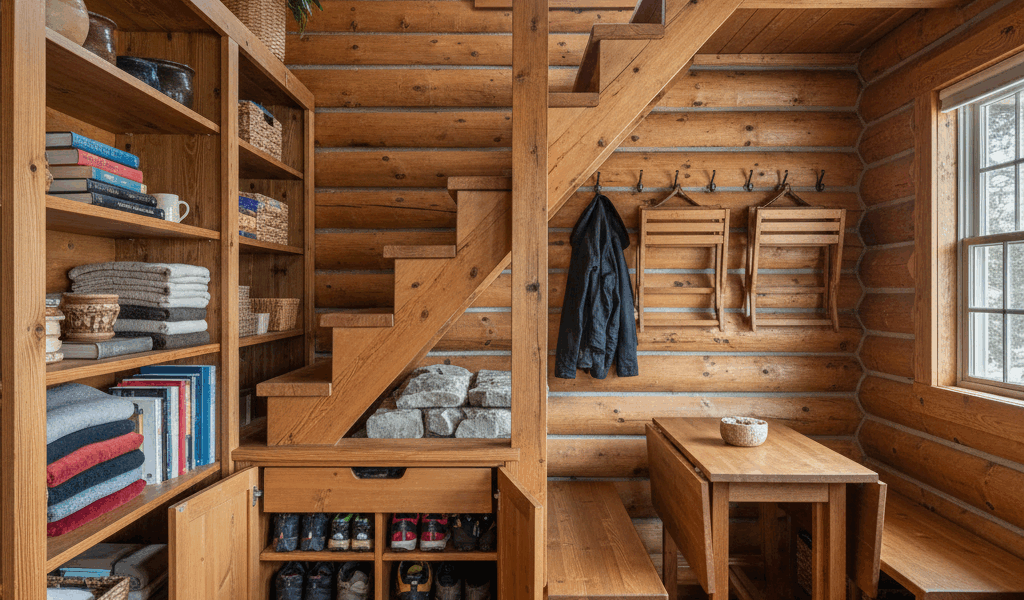
As someone who’s wrestled with storage in two different cabins now, I can tell you that log cabins present challenges that suburban homes don’t face. The open floor plans that make great rooms dramatic also eliminate closets. Log walls resist modification, making afterthought storage additions difficult. Seasonal occupancy demands space for items that permanent residents would distribute throughout daily use. I learned everything the hard way before figuring out what actually works.

Built-In Solutions That Work
Window seats with hinged lids transform dead space beneath windows into substantial storage. The area below a six-foot window seat holds equivalent volume to a standard closet—blankets, games, seasonal decorations, and overflow linens all disappear behind upholstered comfort. Position these beneath windows with the best views, and you’ve created both storage and prime seating in one element. Probably should have led with this: our window seats are the single most useful feature we added.
Stair storage captures space that would otherwise go unused. Open risers allow bins and baskets beneath each tread. Enclosed stairs can incorporate pull-out drawers. The triangular space under entire staircases becomes a closet, pantry, or even powder room when properly designed.
Headboard walls in bedrooms can be thickened to create storage behind the bed. What appears as a solid log wall actually conceals shelving, hanging space, or built-in dressers accessible from the sides. This approach works particularly well in loft bedrooms where conventional closets would consume precious floor area.
Furniture That Multitasks
Every furniture piece in a small cabin should earn its floor space. That’s what makes furniture selection both challenging and rewarding for us cabin owners. Coffee tables with lift tops or drawer storage hide blankets, remotes, and magazines. Ottoman cubes open to reveal interior space while providing seating. Dining benches with hinged seats store table linens and serving pieces used only when entertaining.
Captain’s beds—platforms with drawers beneath—make sense in guest rooms and children’s spaces. The lost vertical space under conventional bed frames represents wasted volume in small cabins. Fill it with seasonal clothing, extra bedding, or luggage stored between trips.
Armoires remain relevant in log homes. Where closets are absent or inadequate, freestanding wardrobes provide hanging space, shelving, and drawer storage in a single piece. Choose rustic styles that complement log aesthetics rather than fighting them. Finding the right armoire has gotten complicated with all the cheap options out there, but quality pieces are worth the search.
Vertical Storage Strategies
Log walls offer unique opportunities for vertical storage. Heavy-duty hooks mounted directly into logs support far more weight than drywall anchors could manage. Pot racks, bicycle hangers, kayak cradles, and gear storage can mount to log walls without concern about structural capacity.
Open shelving between log courses creates display space that feels integrated rather than attached. Books, pottery, and decorative items nestle into wall space that would otherwise contribute nothing. Just ensure items won’t shift during the settling process in new construction.
Loft railings can incorporate storage beneath their top rails. The cavities created by baluster placement hold books, display items, or even shallow drawers. This hidden storage is perfect for items wanted occasionally but not daily.
The Mudroom Matters
Cabins without proper entry organization descend into chaos within days of arrival. Mudrooms—or at minimum, dedicated entry zones—contain the boots, coats, fishing gear, and outdoor equipment that would otherwise migrate throughout the cabin. That’s what makes a good mudroom endearing to us cabin owners who actually use our spaces.
Design mudrooms with specific storage for activities your family pursues. Ski gear requires different solutions than fishing tackle. Hunting equipment needs different organization than hiking supplies. Custom built-ins addressing your actual activities outperform generic coat closets every time.
Include space for wet items to dry without touching finished surfaces. Boot dryers, drying racks, and drip trays prevent moisture damage while keeping gear ready for next use. I installed a boot dryer three years ago and wonder how we survived without it.
Seasonal Storage Solutions
Cabins used seasonally must store everything needed for other seasons. Christmas decorations occupy space all summer. Beach gear takes up room all winter. Planning for this reality prevents off-season clutter from overwhelming in-season living.
Under-floor storage accessed through trap doors works well in crawl space cabins. Items used once annually—holiday decorations, seasonal sports equipment, winter bedding—disappear completely until needed.
Outbuildings should be part of the storage plan. A well-organized shed removes overflow items from the cabin itself while keeping them accessible when needed. This approach works particularly well for maintenance supplies, outdoor furniture cushions, and bulky recreation equipment.
Organization Systems
Containers and labels transform cluttered storage into functional systems. Clear bins show contents without opening. Labels ensure everything returns to proper locations even when different family members are putting things away.
The “one in, one out” rule prevents accumulation from overwhelming available space. When something new enters the cabin, something old leaves. This discipline maintains functionality that unrestricted accumulation destroys. I wish I’d implemented this rule from day one.
Starting Fresh
If you’re building new or renovating, address storage during design rather than retrofitting later. Every room should include dedicated storage appropriate to its function. The cost of built-ins during construction is far less than struggling with inadequate storage for decades afterward.
Small cabins can function beautifully when storage is thoughtfully integrated. Cramped chaos is a design failure, not an inevitable consequence of limited square footage.


Stay in the loop
Get the latest rustic cabin world updates delivered to your inbox.