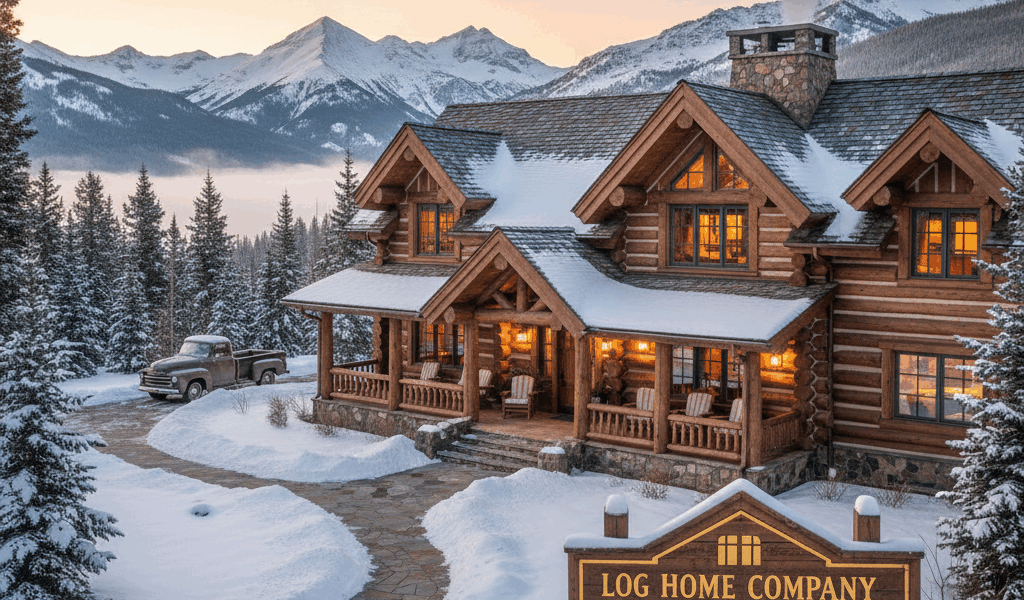
Understanding the Log Company Industry
Log home companies have turned into a moving target with all the marketing spin and competing claims flying around. As someone who spent six months researching log home manufacturers before committing to a build — calling sales reps, visiting model homes, and driving to three different mill yards to watch them actually process timber — I picked up the practical knowledge of how this industry really works. Today, I will share it all with you.

Harvesting Practices
The whole thing starts in the forest, which sounds obvious but matters more than most buyers realize. A good log home company doesn’t just buy random timber from a broker. Their foresters walk the stand, tag specific trees based on species, age, diameter, and straightness. The ones that get selected are typically mature trees that have stopped growing fast — the wood is denser and more stable. Younger trees left behind keep growing, which is the sustainability angle that legitimate companies actually practice rather than just talking about on their websites.
Felling Methods
Smaller operations still use chainsaws and skilled fallers, which I watched firsthand at a mill yard in Tennessee. One guy with a saw and forty years of experience can drop a tree exactly where he wants it with a precision that’s honestly unsettling to watch. Larger companies run mechanical harvesters — these machines grab the tree, cut it at the base, strip the limbs, and buck it into logs in about 45 seconds. The efficiency is staggering. They cost a fortune to buy and maintain, but the output per day makes manual felling look like a hobby.
Transporting Logs
Log trucks are purpose-built for the job — heavy-duty rigs with bunks and stakes designed to secure loads that can weigh 80,000 pounds or more. I followed one down a mountain road in East Tennessee once and the driver handled that thing like it was a sedan. In remote areas where roads don’t exist or can’t handle the weight, companies have used helicopters for extraction, which costs an absurd amount per flight hour but sometimes it’s the only option. River floating still happens in some regions, mostly in the Pacific Northwest, though it’s less common than it used to be.
Processing Timber
Probably should have led with this issue, to be candid, because this is where a log becomes something you can build with. At the mill, logs get debarked, sorted by size, and run through various saws depending on the final product. Band saws for precision cuts, circular saws for speed. Planers smooth the surfaces. Kiln drying brings the moisture content down to around 19 percent or lower, which is critical — green logs shrink and crack as they dry, and a home built with properly dried timber settles more predictably. Every log home company handles this step slightly differently, and the differences show up years later in how the home performs.
Environmental Considerations
This is where the industry splits into companies that walk the talk and companies that just say the right words. Selective logging — taking some trees and leaving the rest — is genuinely sustainable when done correctly. The forest regenerates, wildlife habitat remains mostly intact, and the carbon stored in the harvested wood ends up locked in someone’s home for decades. Replanting programs fill gaps. FSC certification (Forest Stewardship Council) means an independent auditor verified the practices, not just the marketing department. I’m apparently a certification snob and FSC-certified timber works for me while vague claims about “sustainable sourcing” without documentation never inspire confidence.
Economic Impact
In rural communities where these mills operate, the logging industry isn’t just important — it’s often the primary employer. Mill workers, truck drivers, equipment operators, foresters, office staff — one midsized log home company can support fifty to a hundred families in a town that might not have another employer within driving distance. The ripple effects touch everything from the local diner to the school district’s tax base. That’s what makes log home companies endearing to us rural economy watchers — they anchor communities that would otherwise hollow out.
Technological Advancements
GPS mapping lets foresters plan harvest routes that minimize soil disturbance and keep trucks off sensitive areas. Drones fly over timber stands and generate detailed maps showing tree density, species distribution, and access points — data that used to require weeks of ground surveys. At the mill level, computer-controlled saws optimize each log to minimize waste, calculating the best cuts in real time. Laser scanning measures logs to within a fraction of an inch. The industry looks old-fashioned from the outside but the technology running it is genuinely sophisticated.
Regulations and Compliance
Log companies operate under a stack of regulations that would make your head spin. Environmental rules governing water quality near harvest sites, endangered species protections, erosion control requirements, worker safety standards from OSHA, transportation weight limits on public roads — every step has a regulatory layer. Non-compliance isn’t just a fine; it can shut a company down. The reputable firms have compliance officers whose entire job is keeping up with the rules, which change frequently at both state and federal levels.
Supply Chain Management
Coordinating the movement of logs from forest to mill to customer is a logistics puzzle. The company has to time the harvest with mill capacity, match dried inventory to incoming orders, and arrange delivery to build sites that might be a thousand miles away. When I ordered our log package, the sales rep walked me through a timeline that started with timber still standing in the forest and ended with a flatbed truck in our driveway fourteen weeks later. Every step had to connect or the whole schedule slipped. Companies that manage this well deliver on time. Companies that don’t will have you sitting on a bare foundation for months.
Challenges in the Industry
Environmental pressure is constant and it comes from multiple directions — activists, regulators, consumers, and sometimes the companies’ own employees. Lumber prices swing wildly based on housing starts, tariffs, and natural disasters. The 2021 lumber price spike caught everyone off guard and doubled the cost of some log home packages overnight. Land access is another headache: timber rights, easements, and disputes with adjacent landowners create legal tangles that slow operations. And the workforce is aging — finding young people willing to work in remote forests with heavy equipment is harder every year.
Future of Log Companies
The companies that survive the next decade will be the ones that genuinely invest in sustainable practices, adopt technology that reduces waste and improves efficiency, and figure out how to attract younger workers. The carbon sequestration angle is increasingly important — wood buildings store carbon that would otherwise be in the atmosphere, and as carbon markets develop, this could become a real revenue stream. Cross-laminated timber and other engineered wood products are expanding what log companies can sell beyond traditional home packages. The industry is evolving, and the companies paying attention to these shifts are the ones worth buying from.




Stay in the loop
Get the latest rustic cabin world updates delivered to your inbox.