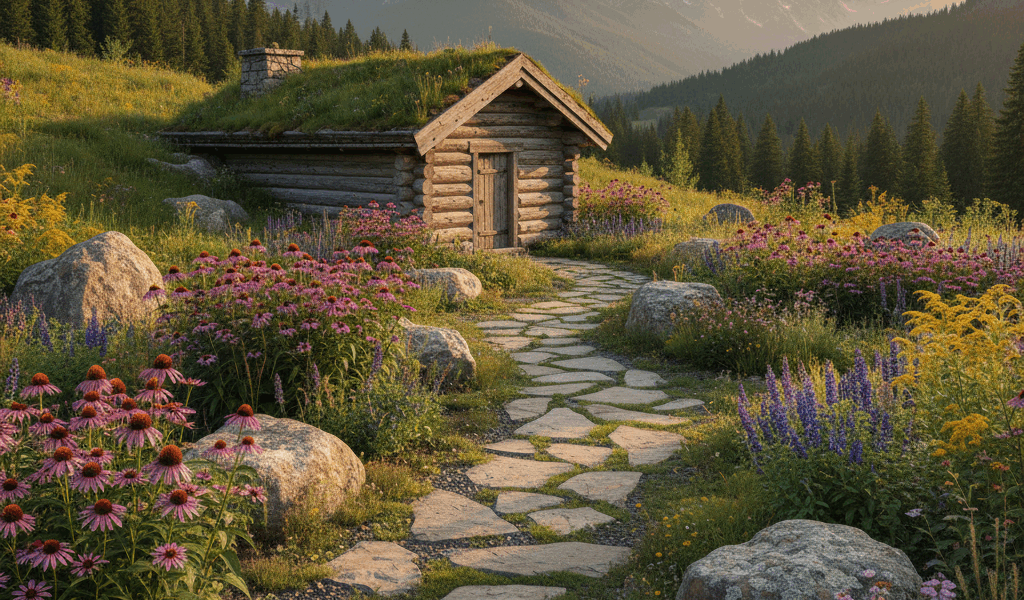
As someone who spent the first three years fighting my cabin landscape before finally accepting what it wanted to be, I can tell you that landscaping a log cabin differs fundamentally from suburban yard design. The goal isn’t creating an outdoor room distinct from the natural surroundings—it’s blending the built environment seamlessly into the landscape that made the location worth building on. I learned everything the hard way before realizing that native plants and natural stone achieve this integration in ways that manicured lawns and imported ornamentals never can.
The Case for Native Plants
Native plants evolved in your specific region over thousands of years, developing adaptations that make them ideally suited to local conditions. They tolerate local soil chemistry, rainfall patterns, temperature extremes, and pest pressures without the intervention that exotic species require. Once established, natives largely take care of themselves. That’s what makes them endearing to us cabin owners who can’t be there every week.
This self-sufficiency matters especially for cabins with intermittent occupancy. Plants requiring regular watering, fertilizing, or pest treatment struggle when owners arrive monthly or less. Natives survive these gaps in attention because they’ve always survived worse. My Japanese maple died the second winter; the native dogwoods I planted as replacements are thriving eight years later.
Wildlife connections run deeper with native plantings. Local birds, butterflies, and pollinators evolved alongside native plants, developing relationships that exotic species can’t replicate. A cabin surrounded by natives attracts more wildlife—and the wildlife that belongs in that specific place.
Identifying Your Natives
Figuring out which native plants to select has evolved with all the options nurseries now stock. Start with understanding your specific site. What grows naturally in surrounding undeveloped areas? What species thrive in similar soil, moisture, and sun exposure? Local extension services, native plant societies, and knowledgeable nurseries can guide selection based on your actual conditions.
Consider plant functions beyond aesthetics. Evergreen natives provide year-round screening and wind protection. Deciduous species offer shade in summer while admitting winter sun. Groundcovers stabilize slopes and reduce erosion. Berry producers feed wildlife through lean seasons. The most successful plantings address multiple needs simultaneously.
Don’t overlook native grasses and sedges. These plants require minimal maintenance once established, handle moisture fluctuations gracefully, and provide habitat for ground-nesting birds and beneficial insects. Meadow plantings of mixed native grasses create seasonal interest that changes throughout the year. Probably should have led with this: my meadow section is now my favorite part of the property.
Natural Stone Integration
Stone native to your region creates visual continuity that imported material cannot match. The granite, limestone, sandstone, or slate that underlies your property should appear in your landscaping—not flagstone from three states away that looks like it parachuted in from another planet.
Sourcing local stone sometimes requires effort. Commercial landscape suppliers often stock whatever’s cheapest, regardless of regional appropriateness. Seek out local quarries, stone salvage operations, or simply collect surface stone from your own property when available in sufficient quantity. I spent two weekends gathering fieldstone from my back acres, and those are now the rocks that look most at home in my garden beds.
Stone placement should appear natural rather than installed. In nature, rocks don’t line up in rows or form perfect circles. They emerge from soil at angles, cluster in organic groupings, and show exposed faces weathered by centuries. Landscaping that mimics these natural arrangements looks right; stone that’s obviously arranged looks artificial.
Practical Stone Applications
Retaining walls built from native stone blend with surroundings while managing grade changes inevitable on sloped cabin sites. Dry-stacked construction without mortar allows drainage and creates habitat pockets that small creatures appreciate.
Stone pathways guide traffic while protecting soil and vegetation from compaction. Stepping stones set in groundcover or gravel provide stable walking surfaces that feel appropriate in rustic settings. Avoid perfectly uniform pavers that read as suburban imports—I made this mistake initially and ripped them out within a year.
Boulder placement creates focal points and defines spaces without constructed barriers. A single well-positioned boulder can anchor a view, mark a turn in a path, or create a destination for afternoon sitting. These placements require eye for composition—study how boulders sit in natural landscapes and replicate those relationships.
The Foundation Transition
Where cabin meets ground demands particular attention. The exposed foundation, regardless of material, wants softening that ties the structure to its site. This transition zone benefits from layered planting—taller shrubs at the rear transitioning to lower groundcovers at the front—that conceals foundation while appearing to have grown there naturally.
Avoid foundation plantings that require constant shearing to maintain artificial shapes. Instead, choose natives whose mature size fits the available space without pruning. This approach reduces maintenance while creating the unforced appearance that suits log cabin aesthetics.
Lawn Alternatives
Traditional lawns make little sense at most cabin sites. The maintenance burden—mowing, watering, fertilizing—conflicts with cabin life priorities. The visual effect—a manicured green rectangle—conflicts with rustic surroundings.
Consider instead meadow plantings, native groundcover masses, or simply allowing natural vegetation to reclaim areas not needed for specific purposes. These alternatives require less maintenance, support more wildlife, and look appropriate in settings where lawns look suburban and out of place. I converted my lawn areas gradually over three years, and now I wonder why I ever mowed at all.
Patience and Process
Native landscaping takes longer to establish than installing nursery-grown ornamentals. First-year plantings look sparse. Some plants fail and need replacement. The finished picture emerges over years rather than weekends.
This timeline actually suits cabin ownership well. The landscape evolves alongside your relationship with the property. By the time the plantings mature, so has your understanding of the place. The result feels inevitable—as if the cabin had always belonged exactly where it sits. That’s the goal, really: a landscape that looks like it was always there, just waiting for you to build your cabin in the middle of it.



Stay in the loop
Get the latest rustic cabin world updates delivered to your inbox.