Exploring the Look and Design of a Cabin
Cabin design has gotten complicated with all the Instagram accounts and shelter magazines flying around. As someone who bought a run-down 1970s cabin on two acres and spent the better part of three years bringing it back to life — including one memorable weekend where I stained the entire exterior by myself and couldn’t feel my arms for a week — I learned everything there is to know about what makes a cabin actually look like a cabin. Today, I will share it all with you.
Exterior Features
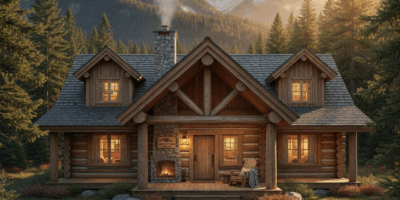
The outside of a cabin is basically its handshake. Logs are the classic building material — either milled into uniform D-shaped profiles or left as full round logs with the bark still showing. Some owners stain them to a warm honey color, others let them weather to silver-gray over the years. I went with a semi-transparent oil stain in “natural cedar” and reapply it every three years, which is just often enough to forget how miserable the job is before committing to it again.
Roofs are where the silhouette comes from. Gable roofs dominate because they shed snow and rain efficiently and they just look right on a cabin. Extended rooflines create overhangs that keep rain off the entrance and provide shade on the porch. Material-wise, you’ll see asphalt shingles on budget builds and metal panels on anything where the owner did the math on long-term costs. Metal costs more upfront but you never replace it. That math convinced me.
- Logs: Natural or stained, they set the entire personality of the exterior.
- Gable Roofs: The default cabin roofline for good reason — they work.
- Extended Rooflines: Practical overhangs that protect the entry and porch.
- Roof Materials: Shingles for budget, metal for longevity.
Windows and Doors
I’m apparently a big-window person and floor-to-ceiling glass works for me while small double-hung windows in a cabin never feel right — they make the whole place feel like it’s squinting. Big windows frame the view, which is the entire reason most people build a cabin where they build it. Picture windows in the main living area, maybe a bay window in the kitchen if the budget allows. Wooden frames keep the rustic look intact, though fiberglass frames painted to look like wood are getting good enough to fool most people.
The front door matters more than you’d think. A heavy solid wood door with iron hardware says “cabin.” A fiberglass door with a brass knocker says “subdivision.” We went with a reclaimed barn door that weighs about 80 pounds and doesn’t close quite right in humid weather, which drives my wife crazy but gives the place character. Glass doors work great for back entrances that open onto a deck — they extend the sight line and make the interior feel bigger.
- Large Windows: The bigger the window, the more the outdoors becomes part of the room.
- Picture and Bay Windows: Worth the cost for the views they frame.
- Wooden Frames: Authentic look, though fiberglass is catching up.
- Solid Wood Doors: Heavy, slightly imperfect, and full of character.
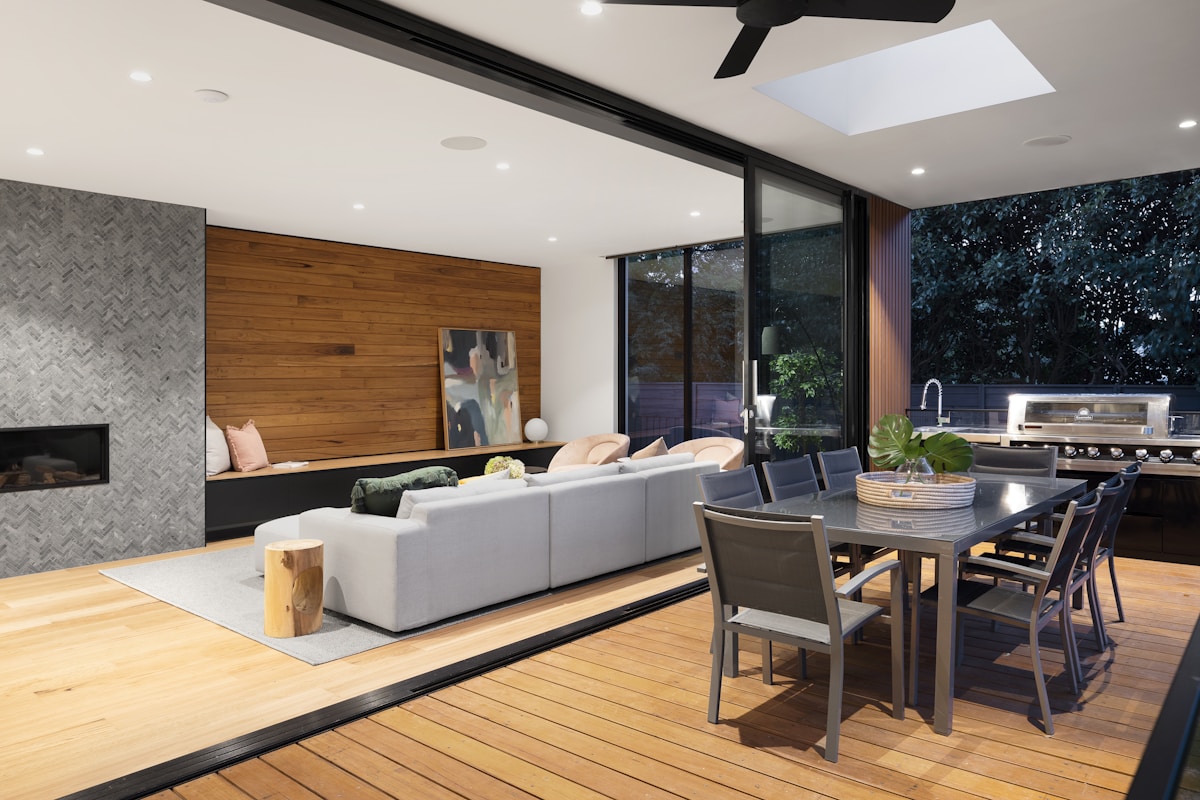
- Glass Doors: Perfect for deck access and expanding the visual space.
Porches and Decks
Probably should have led with this section, honestly, because the porch is where you spend most of your waking hours at a cabin. A covered porch keeps you dry during afternoon thunderstorms and shaded during midsummer heat. An open deck gives you unobstructed sky and is where the grill lives. Most cabins benefit from having both — a covered porch off the front for sitting and an open deck off the back for cooking and eating.
Furniture out there stays rustic. Adirondack chairs are the default for a reason — they’re comfortable, they’re sturdy, and they look like they belong. Rocking chairs if you want to feel like your grandparents, which honestly is the whole vibe. A simple wooden table for setting down your coffee or your book. Some people go all out with built-in benches and fire pits, which transforms the deck into an outdoor living room that gets used from April through October.
- Covered Porches: Rain or shine, this is where you sit.
- Open Decks: Grill territory and sunset viewing.
- Adirondack Chairs: The official furniture of cabin life.
- Built-in Seating: Commits to the outdoor living concept.
- Fire Pits: Extends the usable season by months.
Interior Design
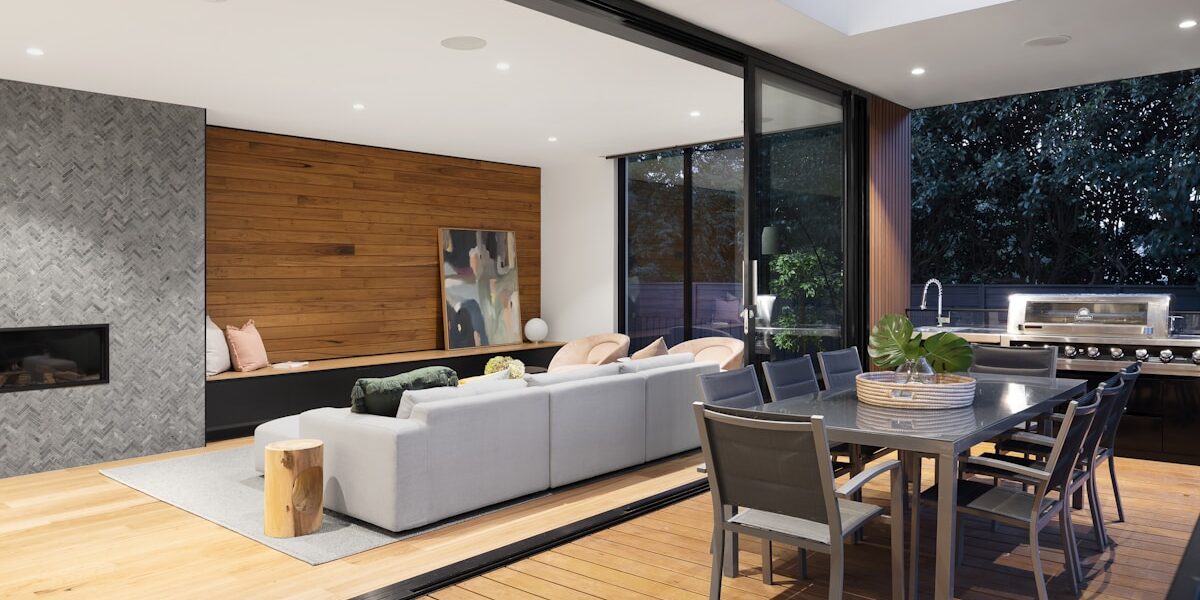
Walk inside a cabin and wood should be the first thing you notice. Walls, ceiling, floor — wood everywhere, in different tones and textures but all unmistakably natural. Open floor plans are common because cabins tend to be compact, and walls just eat up space that a 600-square-foot building can’t spare. The kitchen flows into the dining area flows into the living room, and it all works because the wood ties everything together visually.
Furniture needs to be durable above all else. People come to cabins in muddy boots and wet jackets. A white linen sofa would last about thirty minutes. Leather holds up, develops a patina, and actually looks better with age. Thick-cushion fabric sofas in dark colors work too. Tables are wooden — always wooden — because anything else looks out of place. That’s what makes cabin interiors endearing to us rustic living fans — everything in the room has to earn its spot by being both useful and unbreakable.
- Open Floor Plans: Essential for small spaces to feel livable.
- Timber Everything: Walls, ceilings, and floors in natural wood.
- Durable Fabrics: Built for real use, not showroom display.
- Leather: Gets better with age and abuse.
- Wooden Tables: The only material that doesn’t look wrong.
Fireplaces
A cabin without a fireplace feels incomplete, like a sentence without a period. Stone fireplaces are the classic — big river rock or stacked fieldstone rising from the floor to the ceiling, with a mantel made from a single timber beam. The fireplace becomes the anchor of the entire room. Everything else arranges itself around it. We rebuilt ours using stone salvaged from a demolished barn foundation down the road, which took forever but means every rock has a story, or at least a zip code.
Wood-burning stoves are the alternative, and honestly, they’re more efficient at heating. A good cast iron stove pumps out serious BTUs and you can regulate the burn more precisely than an open fireplace. They take up less space too. The tradeoff is ambiance — a stove doesn’t crackle and glow the same way an open fire does. Some people split the difference with a fireplace insert, which gives you the look of a traditional fireplace with the efficiency of a closed combustion system.
- Stone Fireplaces: The soul of the cabin.
- Timber Mantels: One beam, maximum character.
- Wood-burning Stoves: Practical and efficient heat.
Bedrooms and Bathrooms
Cabin bedrooms lean into the cozy factor. Log bed frames, quilts that weigh about fifteen pounds, and nightstands that look like they were built by someone’s grandfather — because they probably were. Plaid bedding is the cliche and I’m not above it. Something about buffalo check flannel sheets in a cabin bedroom just works on a primal level. The bedroom should feel like a nest, especially if the ceiling is low and sloped.
Bathrooms get more creative than you’d expect. Copper vessel sinks, bronze fixtures, stone-topped vanities. The mirror framed in a log slab has become almost standard. These details sound fussy but they’re actually what keeps the cabin feel consistent through every room. A bathroom with chrome fixtures and white subway tile would feel like stepping out of the cabin and into a Marriott. The materials matter.
- Log Bed Frames: Heavy, solid, and unmistakably cabin.
- Plaid Bedding: A cliche I will defend forever.
- Copper and Bronze Fixtures: Warm metals for warm spaces.
- Stone Countertops: Natural material, natural feel.
- Log-Framed Mirrors: The finishing touch that ties the room together.
Lighting
Warm light only. No overhead fluorescents, no blue-white LEDs. Cabin lighting should feel like firelight — amber, soft, and a little dim. Lantern-style fixtures are common and they work because they reference the era before electricity, which is kind of the cabin fantasy even if you’ve got a 200-amp panel in the closet. Antler chandeliers show up in a lot of cabins and I’ve gone from hating them to accepting them to actually wanting one, which I think is the natural progression.
Natural light does most of the work during the day if the windows are sized right. Skylights in loft spaces prevent that cave-like feeling. The goal is a cabin that’s bright and airy during daylight hours and warm and dim after sunset. Two completely different moods from the same space, controlled entirely by the sun going down.
- Warm Lighting: Amber tones only, nothing harsh.
- Lantern-Style Fixtures: Referencing an older, simpler time.
- Antler Chandeliers: You’ll come around. Everyone does.
- Natural Light: Big windows and skylights during the day.
Decorative Elements
Decor in a cabin shouldn’t look curated. It should look collected — gathered over years from flea markets, family attics, and that one antique store you always stop at on the drive up. Woven rugs anchor the rooms and add texture. Nature-themed art — landscape paintings, wildlife prints, old topographic maps framed and hung — fills the walls without competing with the windows. Handmade objects carry the most weight: a carved wooden bowl, a quilt from a local craftsperson, a set of snowshoes that actually got used before they became wall art.
Bookshelves stuffed with paperbacks that have been read by every guest since 1995. A collection of old oil lanterns on the mantel. Family photos in mismatched frames. These things can’t be bought in one shopping trip — they accumulate, and that accumulation is what makes a cabin feel lived in rather than staged.
- Woven Rugs: Texture and warmth underfoot.
- Nature-themed Art: Landscapes, wildlife, old maps.
- Handcrafted Objects: Every piece has a story.
- Bookshelves: Stuffed with well-loved paperbacks.
- Family Photos: In mismatched frames, as they should be.
Outdoor Spaces
The land around the cabin is as important as the cabin itself. Stone paths from the driveway to the front door, not poured concrete — flat fieldstone set in gravel or moss, something that looks like it grew there rather than was installed. Native plants fill the garden beds because they thrive without constant attention, which is the whole point when you’re only at the cabin on weekends. Some owners put in a small vegetable garden or herb patch, which produces just enough basil and tomatoes to feel self-sufficient without requiring actual farming effort.
Fire pits are the outdoor gathering point after dark. Circle some Adirondack chairs around a stone ring, keep a stack of firewood nearby, and you’ve created the spot where every meaningful conversation happens. Picnic tables handle outdoor meals, and a barbecue grill — even a basic Weber kettle — extends the kitchen outside. These spaces are designed to make you forget the cabin has an inside at all, at least until the mosquitoes come out.
- Stone Paths: Natural-looking walkways that age gracefully.
- Native Plant Gardens: Low maintenance, high impact.
- Vegetable Patches: Weekend self-sufficiency.
- Fire Pits: Where the real cabin living happens after dark.
- Picnic Tables and Grills: Outdoor dining essentials.
A cabin works when every element — from the log siding to the fire pit to the mismatched picture frames on the mantel — feels like it belongs there. Not because a designer placed it, but because someone who actually lives and breathes this stuff chose it over time. That’s the real design principle behind every good cabin, and it’s one that no amount of Pinterest browsing can replicate.

Stay in the loop
Get the latest rustic cabin world updates delivered to your inbox.