
A good porch can make or break a cabin, and I don’t think that’s an exaggeration. We spent months agonizing over the floor plan inside and barely discussed the porch until the last minute — which was a mistake, because the porch ended up being where we spend most of our time from May through October.

Wraparound Porch Appeal
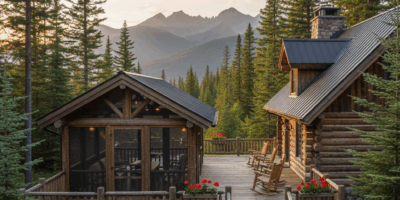
Wraparound porches have been part of log homes since, well, basically forever. And the appeal is obvious once you’ve experienced one. You get shade as the sun tracks across the sky — morning coffee on the east side, evening drinks on the west. No need to move your chair, just walk around the corner. The flexibility is unmatched.
That said, they’re not simple to build. The porch roof needs to integrate cleanly into the main cabin roof, which takes careful structural planning. And the cost adds up fast when you’re wrapping all the way around. From what I’ve seen, most people who go this route don’t regret the investment, but you should know going in that it’s a significant one.
Screened Porch Solutions
If you’ve ever tried to enjoy an evening on an open porch in mosquito country, you already understand why screened porches exist. They’re basically mandatory in the upper Midwest, much of the South, and anywhere near standing water. The ability to sit outside without being eaten alive extends your usable season by months.
Screening options range from permanent installations to removable panel systems that adapt to the season. We went with removable panels — screens go up in May, come down in October — and it works well for our climate. The key is choosing a system that’s actually easy to swap out, because if it’s a hassle, you’ll just leave them up year-round and lose that open-air feel when the bugs aren’t around.
Covered Entry Porches
Even if a full wraparound isn’t in the cards, don’t skip the entry porch. It doesn’t need to be huge — just deep enough that guests aren’t standing in the rain while you fumble for keys. A roof line that extends naturally from the main structure keeps things looking cohesive rather than tacked-on.
Good lighting and solid steps round it out. Seems basic, but I’ve visited cabins where the front steps were an afterthought — wobbly, too narrow, no railing — and it sets a terrible first impression for what’s otherwise a beautiful place.
Materials and Maintenance
That’s what makes porch material choices endearing to us cabin folks — it’s an honest trade-off between aesthetics and how much weekend time you want to spend on upkeep. Real wood decking matches the cabin beautifully and feels right underfoot. Composite materials look decent and basically take care of themselves. Neither choice is wrong; it depends on your tolerance for maintenance.
Whatever you choose, plan for maintenance access from the start. Posts need to be inspectable. Flooring needs to drain properly. Rail connections need to be reachable for tightening. The porches that look great after twenty years are the ones where someone thought about maintenance before the first board went down, not after things started rotting.


Stay in the loop
Get the latest rustic cabin world updates delivered to your inbox.