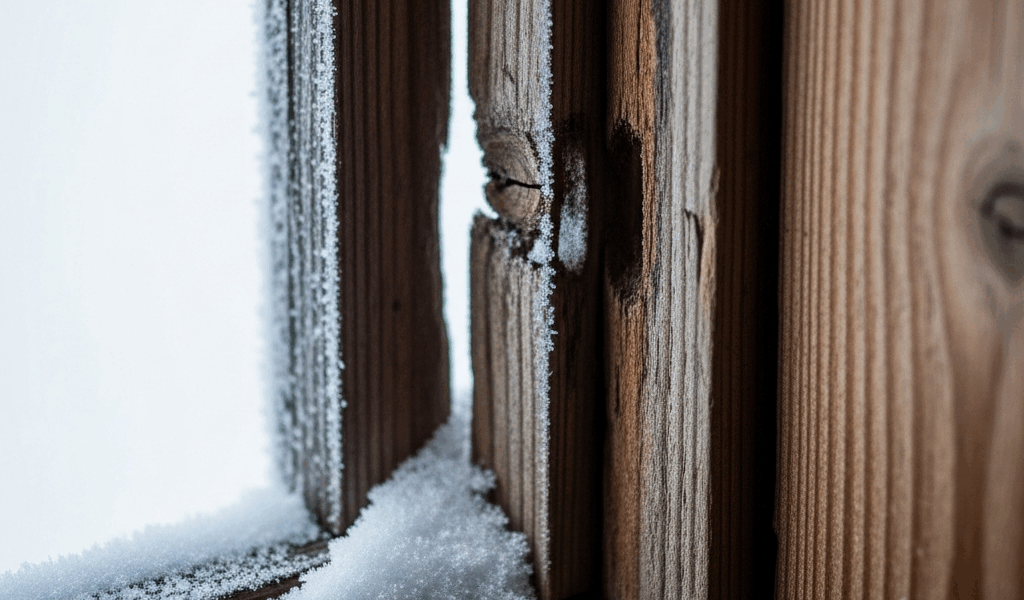
Why Cabin Doors Stop Latching in Cold Weather
Cabin door latching has gotten messy with all the guesswork flying around. As someone who spent three winters troubleshooting this exact problem at my family’s place in northern Michigan, I spent months getting comfortable with what actually goes wrong — and why October’s perfectly functional door becomes January’s enemy. Today, I will share it all with you.
Two things are fighting you. First: wood swelling. Humid fall air settles into your cabin and the frame absorbs it. So does the door. But what is wood swelling, really? In essence, it’s moisture-driven expansion. But it’s much more than that — rough-cut log frames and older timber swell at completely different rates than a modern kiln-dried door slab. That mismatch is why your latch bolt suddenly misses the strike plate by a quarter inch.
Second culprit: frost heave and frame racking. The frozen ground lifts your cabin’s foundation — unevenly, almost always. Older builds without proper footings are especially vulnerable to this. The frame twists. The door hangs crooked. The bolt slides right past the strike plate like it was never there to begin with.
Before grabbing tools, spend five minutes actually looking. Skip the misstep I made — I replaced hardware twice before I bothered diagnosing the real issue.
Check These Three Things Before You Grab a Tool
Open the door all the way and look at the latch-side edge. Run your fingers along the top and bottom. Shiny spots, scraped paint, worn finish — those are rub marks. That’s the door dragging in one direction and telling you exactly where the problem lives.
Grab a flashlight next. Peer at the gap between door and frame on all four sides. An even gap runs roughly the thickness of a credit card — about 0.76 mm, though honestly nobody measures it that precisely. Tight at the top, wide at the bottom? Frame racked. Even gap all around but latch still won’t catch? Wood swelling is your answer. These two scenarios have different fixes, so getting this right matters.
Finally, look at the latch bolt relative to the strike plate opening with your flashlight held at an angle. If the bolt hits the plate above or below the hole, it physically cannot drop into the catch. If it’s visibly striking the plate’s edge instead of entering cleanly — that’s your answer right there.
Quick Fixes You Can Do Right Now
Important part first. These solutions cover most cabin door problems and take less than an hour total.
Move the Strike Plate
This is the easiest fix — and the one most people overlook. The strike plate is that small metal bracket on the door frame the latch bolt clicks into. Three or four screws hold it. If the bolt is landing above or below the opening, you move the plate to meet it.
Loosen the screws just enough to slide the plate up or down maybe a quarter inch. Don’t remove them completely. Close the door and test the latch. Adjust in small increments — small really does matter here. Once it catches cleanly and consistently, tighten everything down. Ten minutes. One screwdriver.
Cost: nothing. Tools: one screwdriver.
Use a Hand Plane on the Latch Edge
A swollen door binds slightly on the latch side, which prevents the bolt from extending fully into the strike plate. A hand plane — I use a Stanley No. 4 that cost me $45 at a flea market — removes a thin shaving from the door’s edge. Just enough clearance to let the latch work freely again.
Mark a light pencil line on the latch-side edge where you plan to plane. Set the plane to take a genuinely thin cut — around 1/32 inch, not more. Plane with the grain direction. Stop after every few passes and test the latch. Overshaving is permanent. That’s what makes slow, incremental work endearing to us cabin owners — there’s no rushing it.
Cost: $20–60 if you don’t own a plane. Tools: hand plane, pencil, sandpaper.
Rub Paraffin Wax on the Bolt
This sounds like a folk remedy. It isn’t. Sometimes a swollen door leaves just enough friction on the bolt that it won’t click into place — not enough to sand away, just enough to be maddening. Paraffin wax, the kind sold for sealing jam jars, runs about $2 for a block at any hardware store. Rub it directly onto the bolt and around the strike plate opening. Latch the door several times. The bolt slides in noticeably easier.
Cost: $2. Tools: the wax itself.
When the Frame Itself Has Shifted
Uneven gaps on all four sides, or a door that visibly hangs at an angle — those are frame problems, not door problems. Hold a level vertically against the hinge-side frame. Not plumb? Frost heave or foundation settling has racked the structure. So, without further ado, let’s be honest about what that means for your Saturday.
This is not a quick fix. Shimming a racked frame requires patience and usually several attempts. You’ll need cedar shims — a bundle runs about $4 at any lumber yard — plus a level and genuine willingness to adjust repeatedly.
Close the door. Open it. Place a shim under the bottom where the door hangs lowest. Close it again and check whether the gap improved. Add shims or reposition them until the spacing evens out. This handles minor racking — a quarter inch or so. I’ve done it three times now and the first time took me most of an afternoon to figure out the right sequence.
If the frame has racked more than half an inch, or shimming simply doesn’t resolve the latch problem, call a professional. Serious foundation movement requires proper assessment — possibly structural work. Don’t ignore it. That’s the frame telling you something about the cabin’s footings, and those conversations only get more expensive with time.
How to Keep Cabin Doors Latching All Winter
Prevention beats a frozen-porch repair session in January. Every September or October — before the humidity cycle shifts — do a quick walkthrough. Check strike plate alignment. Test the latch. Make small adjustments now while the weather cooperates. That’s it.
A door sweep might be the best option, as cabin doors require a genuine moisture barrier. That is because the rubber or felt strip blocks cold air intrusion and reduces the moisture that feeds wood swelling in the first place. A sweep runs about $10 at any hardware store and takes fifteen minutes to install. Your heating bills improve too — I’m apparently very sensitive to drafts and a $12 Frost King sweep works for me while gap-and-crack spray foam never really solved anything.
Seal the exterior joint where the frame meets the cabin wall. Use silicone caulk rated for seasonal movement — not rigid concrete caulk, which cracks when the frame shifts. Silicone handles the movement better than acrylic. Reseal every two or three years and you’ve largely neutralized that moisture entry point.
First, you should check the door again in mid-January — at least if you visit the cabin during winter. A quick half-turn adjustment on the strike plate screws is often all it takes to get through the rest of the season cleanly.
That’s what makes cabin ownership endearing to us seasonal-property people. You’re managing swings that modern suburban homes are deliberately insulated from. The door latch is just one small part of that rhythm. Plan for it, stay ahead of it, and it becomes the kind of problem-solving that reminds you exactly why you own the place.




Stay in the loop
Get the latest rustic cabin world updates delivered to your inbox.