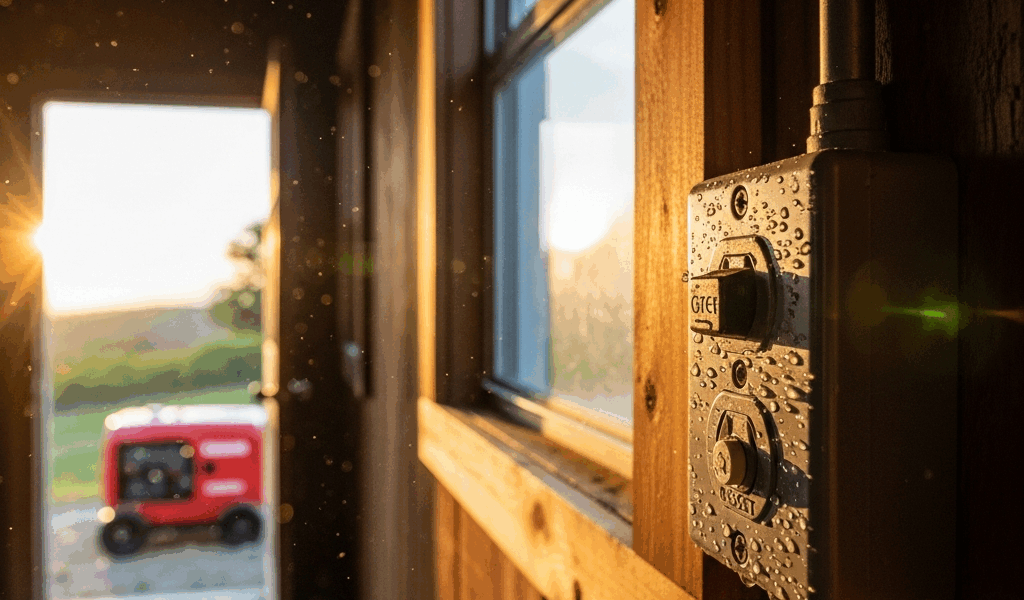
Start With the GFCI Outlet Before Anything Else
Cabin electrical troubleshooting has gotten less clear-cut with all the conflicting advice flying around. So let me cut straight to it: start with the GFCI. Seriously.
As someone who’s walked into more than a few dead-outlet situations at seasonal properties, I taught myself the working side of how GFCIs behave in cabins specifically. Today, I will share it all with you.
But what is a GFCI? In essence, it’s a ground fault circuit interrupter — a safety outlet that cuts power the instant it detects a problem. But it’s much more than that. One single GFCI outlet can silently control every outlet downstream from it on the same circuit. Kill the master GFCI in your bathroom, and you might lose power to outlets in rooms you’d never connect to it. I learned this standing in a freezing cabin in March, convinced the entire electrical system had collapsed. It hadn’t. A tripped GFCI in the bathroom, roughly 40 feet away from where I was troubleshooting, was the whole problem.
Moisture is what trips them in cabins. Humidity, condensation behind exterior wall plates, stagnant air sitting in a closed-up cabin for five months — none of that requires active water intrusion. Temperature swings alone create enough condensation to trigger a reset. That’s what makes GFCI behavior so maddening to cabin owners who are used to year-round homes.
To find and reset your master GFCI:
- Walk every outlet in the cabin — bathrooms first, then kitchen. You’re looking for an outlet with two small buttons in the center labeled TEST and RESET.
- Press RESET firmly until it clicks. Don’t tap it. Press it.
- Go back to your dead outlets and test them.
If power’s back, you’re done. If not, keep walking. Some cabins have two or three GFCIs, each controlling its own downstream section. Reset every one you find.
One thing: if your GFCI trips again immediately after you reset it, stop pushing the button. That’s a live fault — water, a wiring issue, something actively wrong. Skip to the electrician section at the bottom.
Check the Breaker Box the Right Way
Breakers lie. Not intentionally, but they do.
A tripped breaker doesn’t always throw itself fully to the OFF position. It stops in a middle spot — looks almost normal unless you’re hunting for it. I’ve wasted 20 minutes assuming a breaker was fine because it wasn’t visibly flipped all the way over. Don’t do what I did.
Here’s the correct reset method:
- Open the breaker panel and find the breaker serving the dead circuit. Your cabin should have a label directory on the inside of the door — if it doesn’t, you’re guessing.
- Push the breaker all the way to OFF. Fully off, not halfway.
- Wait three seconds.
- Push it back to ON.
Test the outlets.
Cabin panels have a specific vulnerability that residential panels don’t: seasonal disuse. The contacts inside degrade faster when they’re not carrying consistent load. A breaker that held fine last October might stick or wear out after sitting unused through a Minnesota winter. If your panel lives in an unheated shed, an exterior enclosure, or a damp basement — corrosion accelerates the whole process. I’ve seen panels in lake cabins that looked fine from the front and were actively corroding inside.
One reset that holds? Normal. A breaker that trips immediately, or trips again within an hour? That’s a signal, not a fluke. Don’t keep resetting it. Call someone.
Why Cabin Outlets Fail After Winter or Long Vacancy
Your cabin fails in ways your primary residence never will. Probably should have explained this first, honestly.
Fluctuating temperatures are the main enemy. Cold shrinks connections. Spring thaw introduces moisture. An outlet plate sitting against an exterior wall in a closed cabin for five months accumulates condensation behind it — the metal contacts corrode, the wiring connections loosen as the wood framing around them swells and contracts with every freeze-thaw cycle. None of that happens in a house that’s heated and occupied year-round.
Rodent damage is uniquely common in cabins. Mice and squirrels chew Romex — the flexible wire in your walls — and they do it quietly enough that you won’t know it happened until you show up to open the cabin in May. Found a chewed wire behind a kitchen outlet at a friend’s place last spring. That outlet: dead. Every other outlet on the circuit: completely fine, because the damage was localized to one section of wire.
Humidity corrosion rounds out the list. Oxidation builds up on outlet contacts over months of sitting idle. Power technically reaches the outlet, but it can’t push through the corroded contact surface cleanly. Devices don’t run. The outlet feels intermittent — works sometimes, doesn’t others. Frustrating to diagnose, and a common cabin-specific failure mode.
Here’s what validates that frustration: your cabin behaves this way because it is treated differently. Not heated consistently. Not occupied daily. Air not circulating. Electrical system sitting unused, which means it’s not self-cleaning the way an active home’s system is. That’s normal cabin behavior. It’s not catastrophic failure.
Most of these issues clear up with a GFCI reset or a breaker reset. Some don’t — and that’s where the next section comes in.
When the Problem Is the Generator or Power Source
Generator and solar cabins have an extra layer to troubleshoot before anything else makes sense.
For generator-powered cabins, the transfer switch is suspect number one. This switch is supposed to disconnect grid power and connect generator power in one seamless transition. A faulty transfer switch won’t make that handoff — leaving you with no power, or power to some circuits and nothing to others. If you’ve started the generator and outlets still aren’t responding, start there.
Overloaded circuits are the second issue. A typical cabin generator runs somewhere between 5,000 and 7,500 watts. Run a space heater (1,500W), a microwave (1,200W), a water heater element (4,000W), and a refrigerator (600W) at the same time and you’ve blown past capacity. The generator’s own circuit breaker trips — not the breaker inside your cabin panel. You’ll see it as power to some outlets and nothing to others, depending on how circuits are distributed across the load.
Voltage drop is less obvious but real. A generator running low on fuel or struggling to stay at speed might produce 110 volts instead of 120. Sensitive electronics won’t run. Lights dim. Fans spin slower than normal. A $15 multimeter from any hardware store will tell you exactly what voltage you’re getting — at least if you want a real answer instead of guessing.
Solar and battery systems have their own failure mode: a dead charge controller or inverter that cuts power without tripping anything visible. No breaker, no GFCI, no obvious sign. If you’re running panels and batteries, check the inverter’s LED status indicators first. Most models — the Victron MultiPlus, the Growatt SPF series, others — have a color-coded status system explained in the manual.
When to Stop DIYing and Call an Electrician
Worth flagging before going further.
Stop what you’re doing if you see any of these:
- Burning smell anywhere near the panel or outlets
- Discolored or scorched outlet plates — even faint yellowing
- A breaker that won’t stay ON no matter how many times you reset it
- Multiple circuits completely dead at once
- Signs of rodent activity near outlets — droppings, chewed insulation, visible wire damage
- Outlets that are warm or hot to the touch
- Visible corrosion or moisture inside the breaker panel itself
None of that is reset territory. You need a licensed electrician, and sooner rather than later.
When you call, lead with three pieces of information: whether the problem started after seasonal closure, whether you’ve seen any evidence of rodents, and whether the cabin runs on generator or solar power. That context saves the electrician an hour of diagnostic time — and saves you money on the service call. Most cabin electricians charge somewhere between $150 and $300 for a service visit depending on location and travel distance. Giving them that context upfront keeps the call efficient.
Your cabin’s electrical system isn’t fragile. It’s just different from what you’re used to. Treat it that way, and most dead outlets resolve in under five minutes.




Stay in the loop
Get the latest rustic cabin world updates delivered to your inbox.