How to Tell If Your Cabin Humidity Is Actually the Problem
Cabin humidity has gotten less clear-cut with all the conflicting advice flying around. As someone who spent a sweaty, mold-paranoid July in a log cabin in upstate New York, I spent real time learning the ins and outs of moisture management the hard way. Today, I will share it all with you.
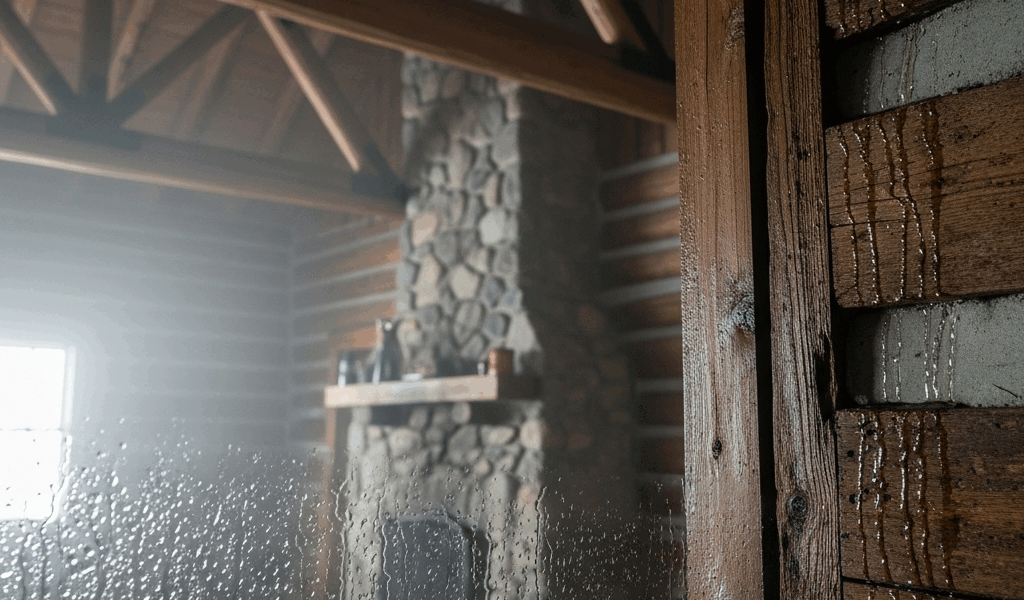
It was 11 p.m. when I typed “cabin humidity too high inside what to do about it” into my search bar. My windows had fogged over — not the thin morning condensation kind, but thick enough that the treeline had completely disappeared. The place smelled like a wet basement. Not ideal.
Before you panic-buy anything, confirm that humidity is actually your culprit. Grab a cheap hygrometer — I grabbed an AcuRite model for $12 on Amazon — and tape it to a wall in your main living space for a few hours. Anything above 60% relative humidity (RH) is where problems start compounding fast in a cabin setting. Above 70%, you’re looking at mold risk and real structural wood damage.
Signs that humidity is the real problem:
- Fog on windows that doesn’t clear within an hour of opening them
- A musty, earthy smell that lingers even after cleaning
- Visible condensation beading on metal pipes, exterior walls, or window frames
- Wood that feels soft or damp when you press your fingernail into it
- Black or green mold starting in corners, especially where walls meet the ceiling
- That clammy feeling on your skin even when it’s cool outside
I ignored the early signs for two weeks. Spare yourself the wrong turn I took. By the time I actually measured anything, I was sitting at 72% RH with mold already blooming along the north wall — the coolest spot in the whole cabin.
The Most Common Reasons Cabins Get Humid Inside
But what is a cabin humidity problem, really? In essence, it’s excess moisture with nowhere to escape. But it’s much more than that — it’s a structural issue, a ventilation issue, and sometimes a behavior issue all rolled into one soggy package. That’s what makes cabin humidity endearing to us cabin owners. It’s never just one thing.
Humidity problems in cabins aren’t the same as humidity in a suburban split-level. Your cabin isn’t climate-controlled. It breathes differently. The sources are specific.
Log walls absorb and release moisture seasonally
Log walls are porous. Genuinely porous. During humid seasons — spring through early fall in most climates — logs absorb moisture from surrounding air and ground. Come winter, those same logs release that moisture back into the interior as heat warms the structure. This isn’t a flaw. It’s just how log cabins function. Transition seasons are naturally the worst for indoor humidity because of it.
Dirt or gravel crawlspaces with no vapor barrier
This is the big one. Most older cabins — and honestly, plenty of newer ones — have exposed dirt or gravel crawlspaces underneath. That ground wicks moisture upward constantly. No vapor barrier means all of it enters your living space. I found this was my primary problem after I finally crawled under the cabin with a flashlight and a healthy sense of dread.
Lack of cross-ventilation in older builds
Cabins built before the 1990s often have one or two small windows per room, if that. No real airflow design. Moisture gets trapped because there’s nowhere for it to go. Even one open window helps. Cross-ventilation — windows on opposite walls — helps dramatically more. Simple physics, consistently ignored.
Cooking and showering without exhaust fans
A pot of water boiling for pasta releases roughly a quart of moisture into the air in thirty minutes. A hot shower adds another gallon or so. In a small cabin with poor ventilation, that moisture condenses on every cool surface it can find and soaks straight into the wood.
Wet firewood stored inside
I’m apparently someone who once stacked freshly cut logs near the woodstove for convenience, and that arrangement worked against me while every other fix I tried never quite landed. Green wood releases moisture continuously as it dries. Convenient for maybe two weeks. A quiet humidity factory for everything after that.
Quick Fixes That Actually Make a Difference
Start here. These work fast and cost almost nothing. So, without further ado, let’s dive in.
Open windows strategically for cross-ventilation
Open two windows on opposite sides of the cabin for at least thirty minutes each morning and evening. Early morning is best — outdoor humidity is lowest then. In my cabin, this one habit dropped interior RH by 8–10 percentage points within three days. It sounds obvious. Most cabin owners don’t actually do it consistently.
Run exhaust fans while cooking or bathing
If your cabin has bathroom or kitchen exhaust fans, use them — at least if they vent to the outside and not the attic. Run the bathroom fan during your shower and for fifteen minutes after. Same rule for cooking. No exhaust fan? A portable box fan pointed out an open window does the job well enough.
Move firewood outside
Store firewood on a rack outside, covered loosely with a tarp. It dries faster out there. Green wood needs six months to a year of drying anyway — don’t bring it inside until it’s properly seasoned and your cabin humidity isn’t already elevated. The convenience isn’t worth it.
Check door and window seals
Paradoxically, poor seals can trap damp outside air inside. Walk the perimeter on a humid day and feel for gaps. Caulk them. It seems counterintuitive when you’re also trying to promote airflow, but this stops outdoor humidity from entering freely during genuinely wet seasons — which is a different problem worth solving separately.
Add a portable dehumidifier
Size matters here. For a 400-square-foot cabin, a 30-pint unit runs about $150–$200. The Frigidaire FAD301NUD might be the best option, as cabin use requires something compact that works without central AC. That is because most cabin layouts don’t accommodate larger units well, and this model handles the square footage without dominating the room. Run it four hours a day during humid months. Empty the bucket — or run a drain hose to a sink or outside — and don’t expect it to solve anything permanently on its own.
The Crawlspace and Foundation Fix Most Cabin Owners Ignore
The piece that matters most here.
Ground moisture vapor rising through your foundation is likely responsible for 60–70% of your humidity problem. Ignoring it means every other fix only gets you halfway there.
If your cabin has a dirt or gravel crawlspace, lay a plastic vapor barrier across the entire floor. Use 6-mil polyethylene sheeting — thinner and it tears; thicker and you’re paying triple for no meaningful performance gain. Overlap seams by at least six inches and tape them with Gorilla Tape. Secure the edges with bricks or stakes so wind doesn’t lift it.
This single step reduced my cabin’s humidity from 72% to 58% RH in three weeks. Three weeks. The crawlspace barrier became the most impactful thing I did — more than the dehumidifier, more than the ventilation changes.
Concrete foundation instead? Check for cracks where water seeps through. Small cracks get sealed with standard concrete crack filler — Quikrete makes a reliable tube version for about $8. Larger cracks or persistent seepage warrant a sump pump or an exterior drainage assessment from someone who actually knows foundations.
When High Humidity Signals a Bigger Problem
Sometimes humidity isn’t the root issue. It’s a symptom.
Look for warning signs that point toward structural problems:
- Staining patterns on walls or ceilings that follow a roof line or corner
- Log walls that feel soft when pressed, especially at the base
- Mold that returns within days of cleaning, regardless of humidity control efforts
- Water pooling in the crawlspace or foundation
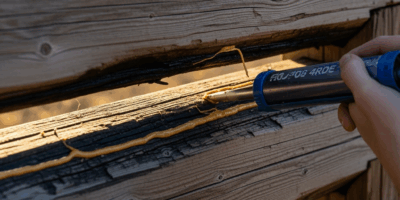
- Chinking — the material between logs — that’s cracked, missing, or crumbling
A roof leak feeding moisture into wall cavities looks exactly like a humidity problem. It isn’t. Failed chinking lets rain infiltration masquerade as standard seasonal moisture. It’s worse. A compromised foundation creates persistent humidity that no dehumidifier solves alone — ever.
When you spot these patterns, get a professional assessment. A structural inspector or experienced cabin contractor can separate the manageable problems — vapor barrier, better ventilation — from the serious ones — re-chinking, roof repair, foundation work. Catching it early makes all the difference between a $500 fix and a $15,000 one. That gap is not an exaggeration.



Stay in the loop
Get the latest rustic cabin world updates delivered to your inbox.